After spending some time in Italy, I came home determined to research and recreate an authentic spaghetti carbonara — the kind you’ll find on just about every street corner in Rome. Traditional carbonara is surprisingly simple, made with just a handful of ingredients. The only truly unique ingredient is guanciale, an Italian cured pork cheek or jowl, but if you absolutely can’t find it where you live, a thick-cut pancetta works as a great substitute.
The technique, though, is just as important (if not more so) than the ingredients themselves. This recipe walks you through how to create a perfectly silky sauce, so you don’t end up with scrambled eggs!
FAQ
What makes an authentic Italian spaghetti carbonara?
An authentic Italian carbonara is made with just a few simple ingredients: spaghetti, guanciale, egg yolks, Pecorino Romano, and freshly cracked black pepper. While some modern versions include garlic, onions, or cream, these are not part of the traditional Roman recipe.
What is guanciale? Can I substitute pancetta or bacon?
Guanciale is an Italian cured meat made from pork cheek or jowl. It has a high fat content and a rich, slightly sweet flavor that’s essential to authentic carbonara. If you can’t find guanciale, pancetta is the closest substitute. Bacon can also be used in a pinch, but it has a smoky flavor that will change the overall taste of the dish.
What is the best cheese for carbonara sauce?
Pecorino Romano is the most commonly used cheese in carbonara. Some recipes use Parmigiano Reggiano or a blend of both. I find that a blend of the two helps balance the saltiness of the Pecorino while adding a bit more depth of flavor to the sauce.
What pasta is best for a carbonara?
Spaghetti is the most traditional pasta for carbonara, but other shapes like bucatini, rigatoni, or cavatappi also work well. The key is choosing a pasta that can hold onto the silky, egg-based sauce, whether through length or ridges.
Can I make spaghetti carbonara ahead?
Spaghetti carbonara is best served immediately. Because the sauce is made with eggs, it’s quite delicate and can become too thick, or even scramble, when reheated. One option is to prep your ingredients ahead of time, then cook and bring everything together just before serving.
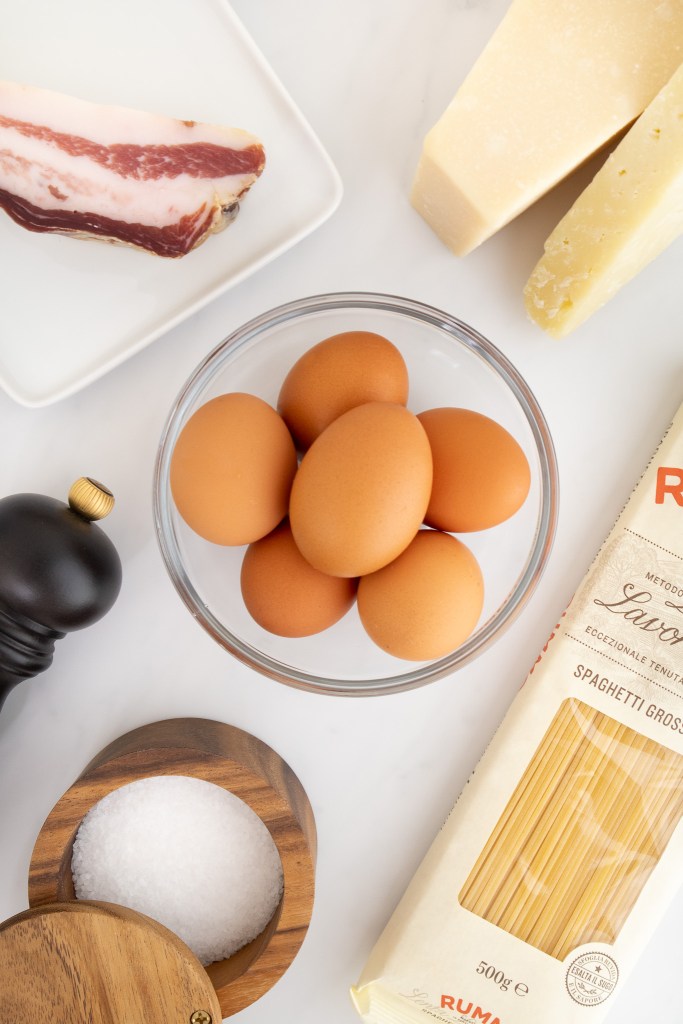
How to Make Authentic Spaghetti Carbonara
Bring a large pot of salted water to a boil (I use 4 quarts of water and 2 Tbsp of Diamond Crystal kosher salt).
Note: The water should be seasoned, but not as salty as in typical pasta recipes (guanciale is already quite salty). Adjust according to whichever brand of salt you use.
Trim the guanciale rind and cut into ⅕- to ¼-inch batons.

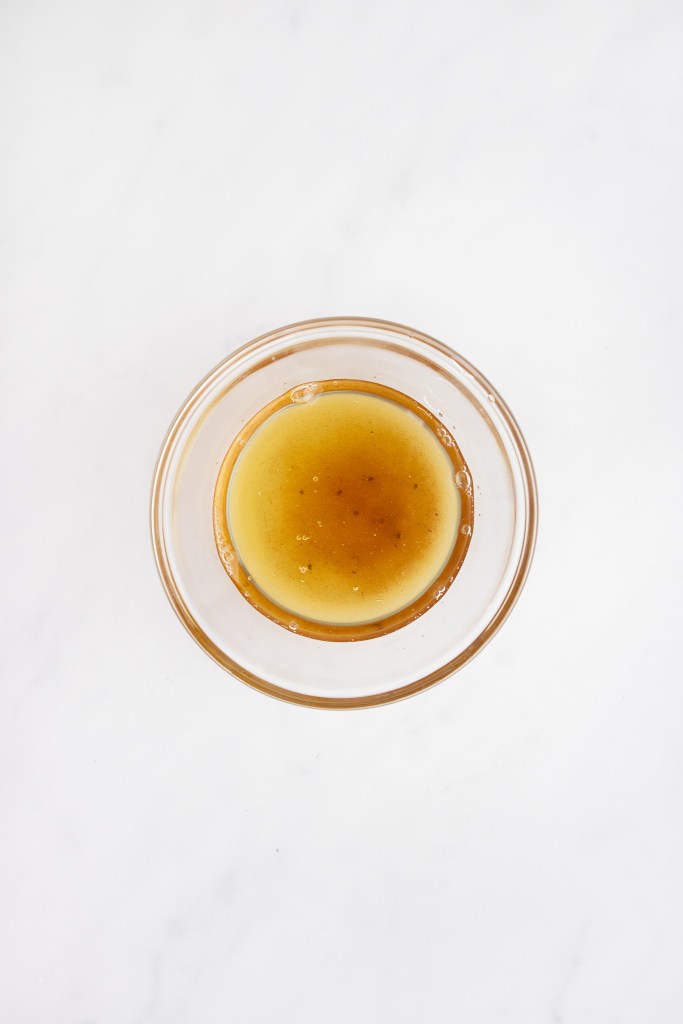
In a large frying pan (large enough to mix all of the pasta at the end of the recipe), fry the guanciale over medium heat until crisp. Remove from the heat, drain the fat rendered from the guanciale into a small bowl, and set both aside.

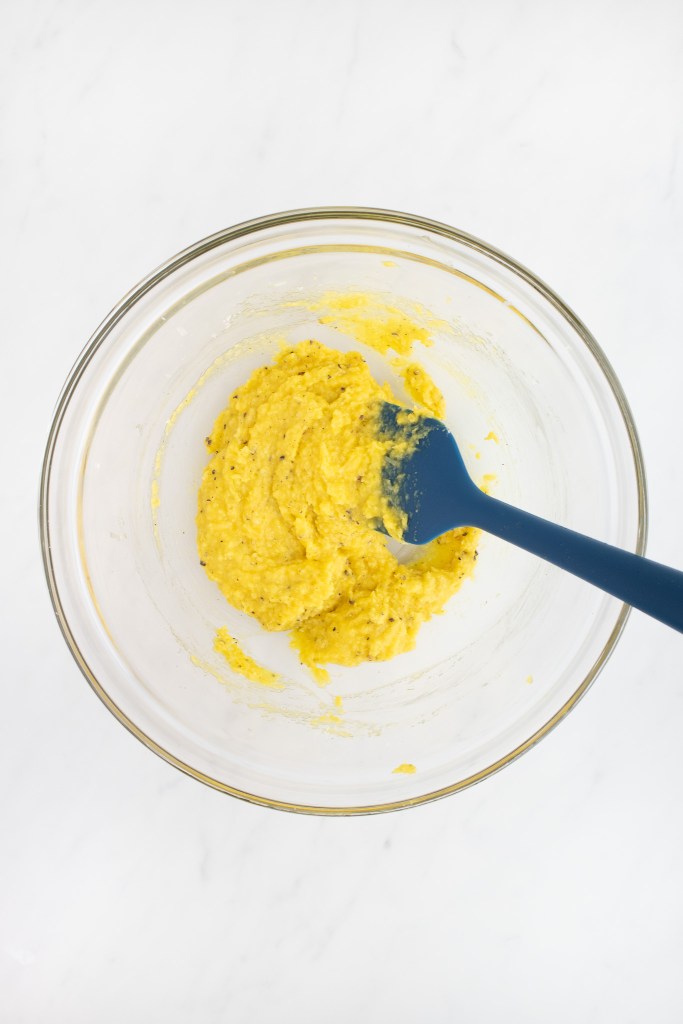
In the meantime, in a large bowl, whisk together the egg yolks, cheese, and pepper until it forms a thick paste. Set aside.
Cook the spaghetti according to the package instructions. Reserve the pasta cooking water once the pasta has finished cooking.
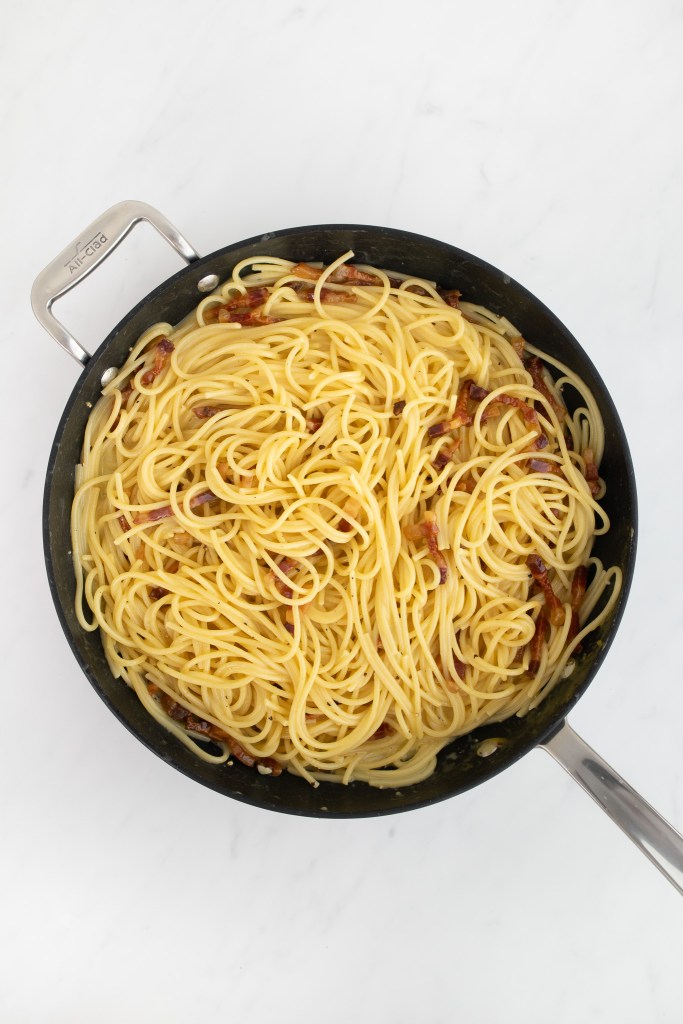
Over low heat, add the cooked pasta into the pan with the guanciale along with 2 tablespoons of the reserved fat. Cook for about 1 minute just until coated.
Next, add in your egg and cheese mixture and ½ cup of the reserved pasta water. Stir the paste vigorously into the noodles until it forms a silky sauce. Add additional reserved pasta water, 1 to 2 tablespoons, at a time, as needed — the pasta should be well coated but not overly runny. Be careful not to overheat the sauce or the eggs may scramble!
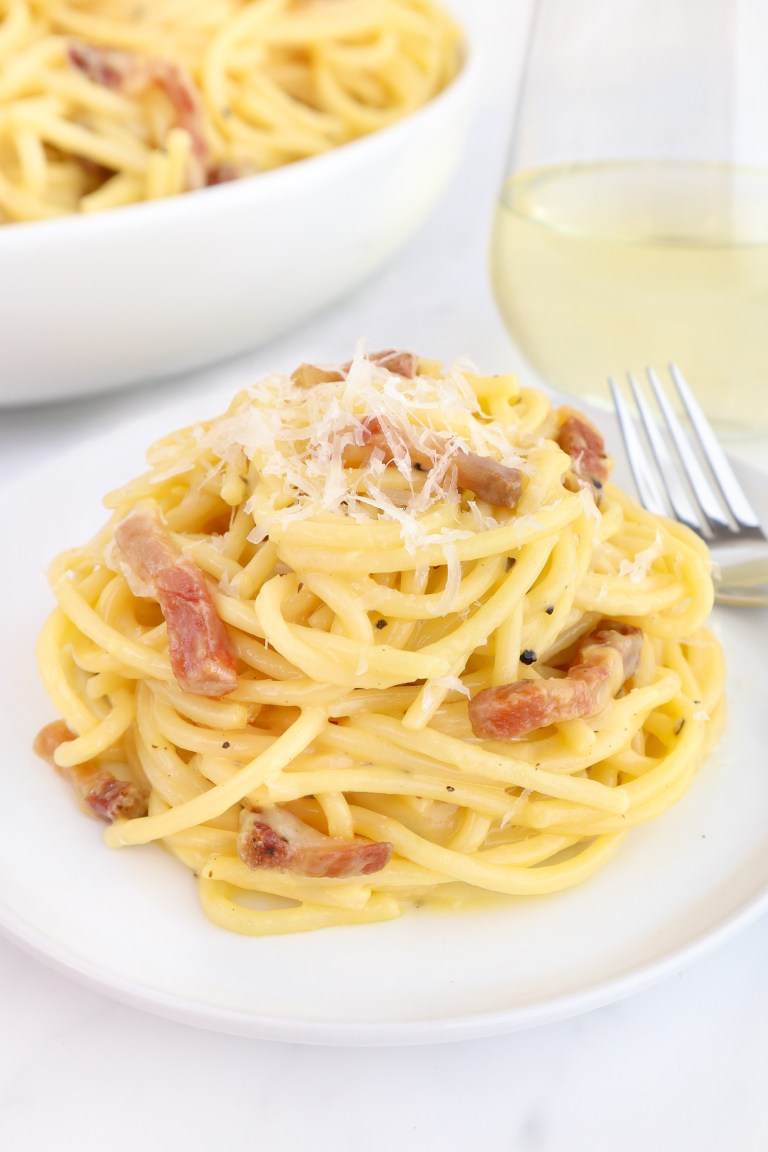
Serve immediately with additional freshly cracked black pepper and finely grated cheese.
Authentic Spaghetti Carbonara
Ingredients
- 400 grams spaghetti
- 150 grams guanciale (Italian cured pork), cut into ⅕" – ¼" batons (see Note 1)
- 6 large egg yolks
- ⅔ cup (65g) Pecorino Romano, finely grated and very tightly packed (plus more for serving)
- ⅓ cup (30–35g) Parmigiano Reggiano, finely grated and very tightly packed (plus more for serving)
- 1 tsp freshly cracked black pepper (plus more for serving)
- Kosher salt (for pasta water; I use Diamond Crystal)
Instructions
- Bring a large pot of salted water to a boil (I use 4 quarts of water and 2 Tbsp of Diamond Crystal kosher salt).Note: Since the guanciale is quite salty, the water should be well-seasoned but not as salty as in typical pasta recipes. Adjust according to whichever brand of salt you use.
- Trim the rind from the guanciale and cut into ⅕- to ¼-inch batons.150 grams guanciale (Italian cured pork), cut into ⅕" – ¼" batons
- In a large frying pan (large enough to mix all the pasta at the end), fry the guanciale over medium heat until crisp. Remove from the heat and transfer only the rendered fat into a small bowl, leaving the guanciale in the pan. Set both aside.
- Meanwhile, in a large bowl, whisk together the egg yolks, both cheeses, and the pepper until it forms a thick paste. Set aside.6 large egg yolks⅔ cup (65g) Pecorino Romano, finely grated and very tightly packed⅓ cup (30–35g) Parmigiano Reggiano, finely grated and very tightly packed1 tsp freshly cracked black pepper
- Cook the spaghetti according to the package instructions. In a large glass measuring cup, reserve the pasta cooking water.400 grams spaghetti
- Return the frying pan (with the guanciale) to low heat. Add in the cooked pasta along with 2 Tbsp of the reserved guanciale fat. Toss the pasta, cooking just until the pasta is coated (about 1 minute).
- Add in the egg and cheese mixture and ½ cup of the reserved pasta water. Stir the paste vigorously into the pasta until a silky sauce forms. Add additional reserved pasta water, 1 to 2 Tbsp at a time, as needed (the pasta should be well coated but not overly runny). Be careful not to overheat the sauce, or the eggs may scramble.
- Serve immediately with additional freshly cracked black pepper and finely grated cheese.
Notes
- Guanciale substitutions: If you can’t find guanciale, pancetta is the closest substitute. Bacon can also be used in a pinch, but it has a smokier flavor that will change the overall taste of the dish.