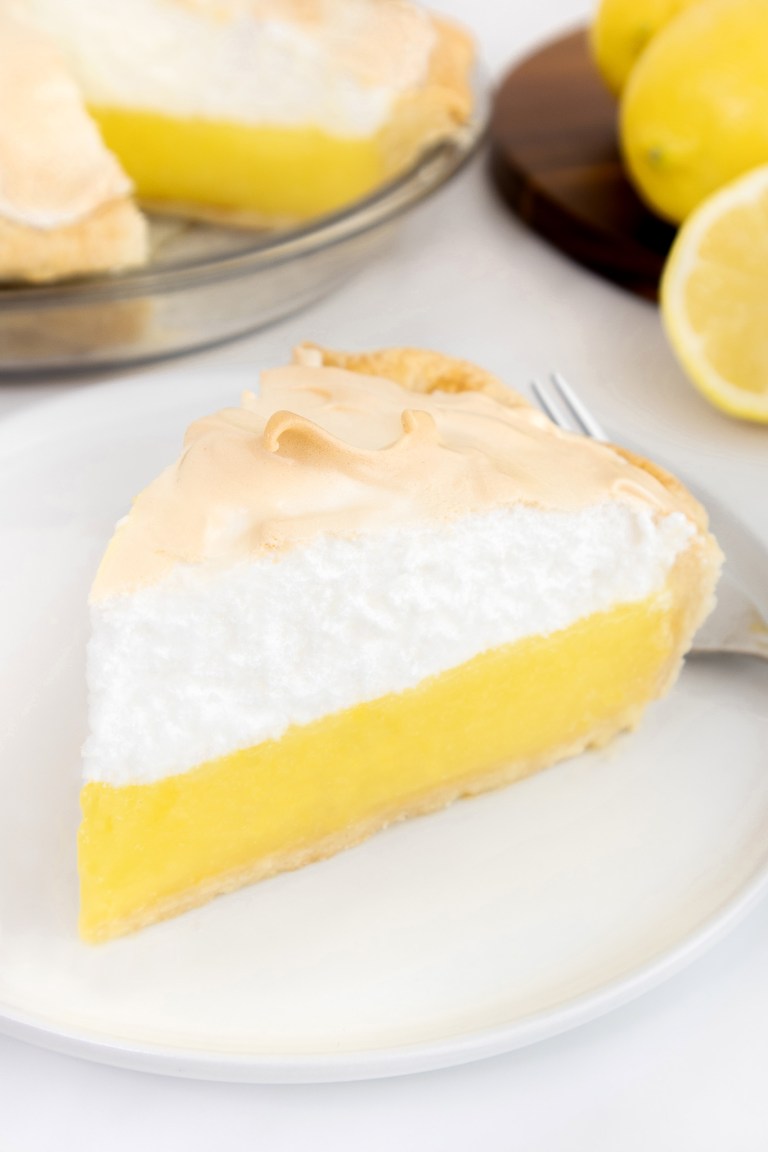
As a lover of all things lemon and not-overly-sweet desserts, lemon meringue pie is one of my all-time favorites. Lemon meringue pie consists of a layer of tangy lemon curd topped with sweet and pillowy meringue — all in a flaky, buttery pie crust. I usually go for a homemade pie crust (click for my Flaky Pie Crust recipe, but you can always use a store-bought crust if you want to have this recipe prepared even faster!
WHOLE EGGS VS. EGG YOLKS IN LEMON CURD
Traditionally, the curd used for lemon meringue pie is light in texture. This is why many recipes add whole eggs and/or water to the curd — to give it that light and refreshing quality. This recipe uses 2 whole eggs and 4 egg yolks in the curd. I find this to be the perfect ratio for lemon meringue pie. Not only does including the two whole eggs make the curd a bit lighter than using only yolks, there is ultimately no waste (as only 4 egg whites are required to make the meringue).
HOW TO MAKE A SILKY SMOOTH LEMON CURD
The key to the perfect lemon curd is ensuring that your eggs never get too hot… otherwise you may end up with lemon-flavored scrambled eggs! By taking your time to temper the eggs — whisking them constantly and heating them slowly — you will have a perfectly smooth curd, every time.
HOW TO PREVENT MERINGUE FROM WEEPING
Traditional French meringues — like the ones typically used in lemon meringue pie — tend to exude liquid as they set (this is called “weeping”). Weeping can be made worse by a number of factors: under-beating or over-beating the meringue, the temperature of the curd, underbaking or over-baking the pie… even humid weather! Though difficult to eliminate completely, here are a few tips to help prevent weeping:
- Whip the Meringue Just Enough: The key is to make sure that the meringue is whipped just to glossy, medium-stiff peaks. Under-beaten meringue can lack the structure required to hold on to moisture. Also, sugar is hygroscopic (meaning it attracts water), so any undissolved sugar in the meringue can lead to further weeping. You can always test the meringue by rubbing some of it between your fingers to see if you feel any sugar granules. On the other hand, over-beaten egg whites can become too frail, causing them to collapse and release moisture.
- Set the Meringue Directly onto the Hot Curd: Placing the meringue on top of the hot curd helps it adhere to the curd and begin cooking immediately. Just be sure to get the pie into the oven quickly so that the meringue doesn’t begin to deflate.
- Spread the Meringue to the Edges of the Pie: Spreading the meringue so that it touches the crust on all sides helps to seal in any moisture, and helps to prevent your meringue from shrinking as it cools.
- Avoid Under-Baking the Pie: Removing the pie from the oven before the meringue is fully set and golden brown can result in condensation and, ultimately, liquid pooling between the curd and the meringue.
- Allow the Pie to Cool Completely Before Chilling: Setting the pie in the fridge too quickly can also lead to condensation, resulting in liquid pooling between the layers of the pie.
- Add Cornstarch to the Meringue: I recommend adding 1 Tablespoon of cornstarch to the meringue to help counteract weeping and absorb any excess moisture.
At the end of the day, weeping is a natural process that is very difficult — if not impossible — to prevent. Because of this, I recommend serving lemon meringue pie within the first day or two after making it, when it is at its best!

PREPARING THE PIE DOUGH
Start by preparing the pie crust (I use my Flaky Pie Crust recipe), or simply skip this step if using a store-bought pie shell.
Preheat your oven to 400℉.
Place the chilled pie dough on a well-floured surface. Using a floured rolling pin, roll out dough into a circle about 1″ larger in diameter than the pie dish. Keep rotating the dough to prevent sticking.
Carefully transfer the rolled-out dough onto the pie dish and gently press the dough into the bottom and side edges of the dish to form the crust, as desired. Chill it in the freezer for 5 minutes.
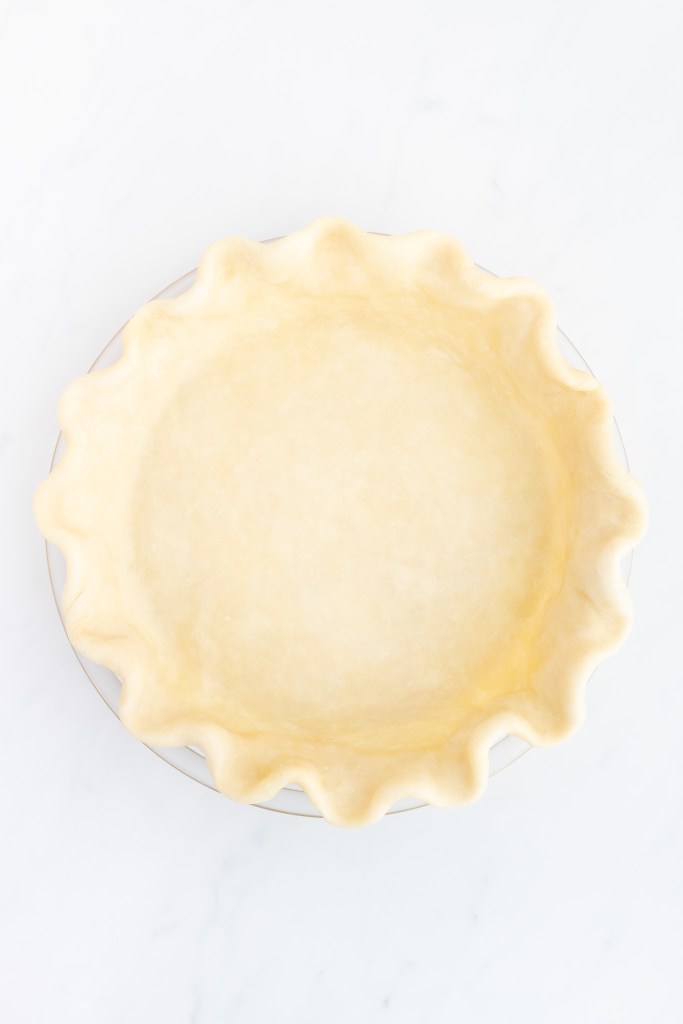
Remove the pie crust from the freezer and prick the bottom layer of the crust with a fork.
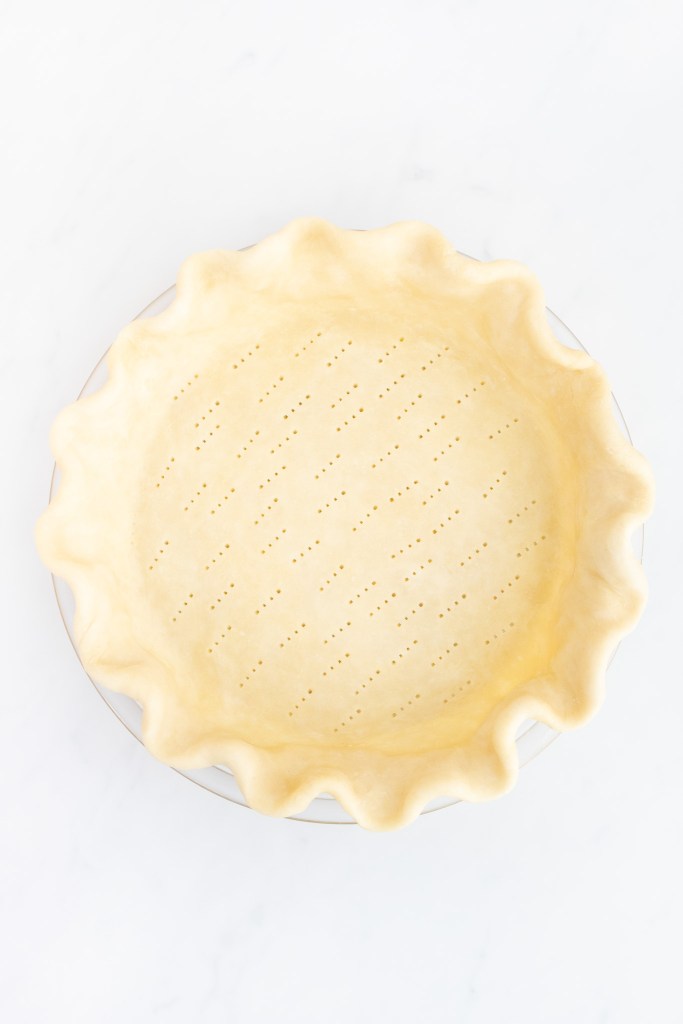
Then, place aluminum foil against the surface of the dough and gently press the foil into the bottom and inner edges of the dish. Using baking beans or pie weights, weigh down the aluminum foil. Bake the dough for about 20 minutes, then remove the foil and beans (or pie weights) and bake for another 8 to 10 minutes, until the crust is lightly golden brown.
Set the crust on a wire rack and allow it to cool completely.


PREPARING THE LEMON CURD FILLING
Turn your oven down to 350℉.
Start by separating your eggs. It is easier to separate eggs (whites and yolks) when they are cold, so I recommend separating the 4 eggs into two separate bowls, then allowing them to come to room temperature. You can also place the bowls into a hot water bath to speed up the process.
You will need an extra 2 whole eggs, which are added to the bowl with the 4 egg yolks. But, remember, try not to get any egg yolks into the egg whites — otherwise, they won’t mount!

Whisk the 2 whole eggs and 4 egg yolks together in a large bowl and set them aside.
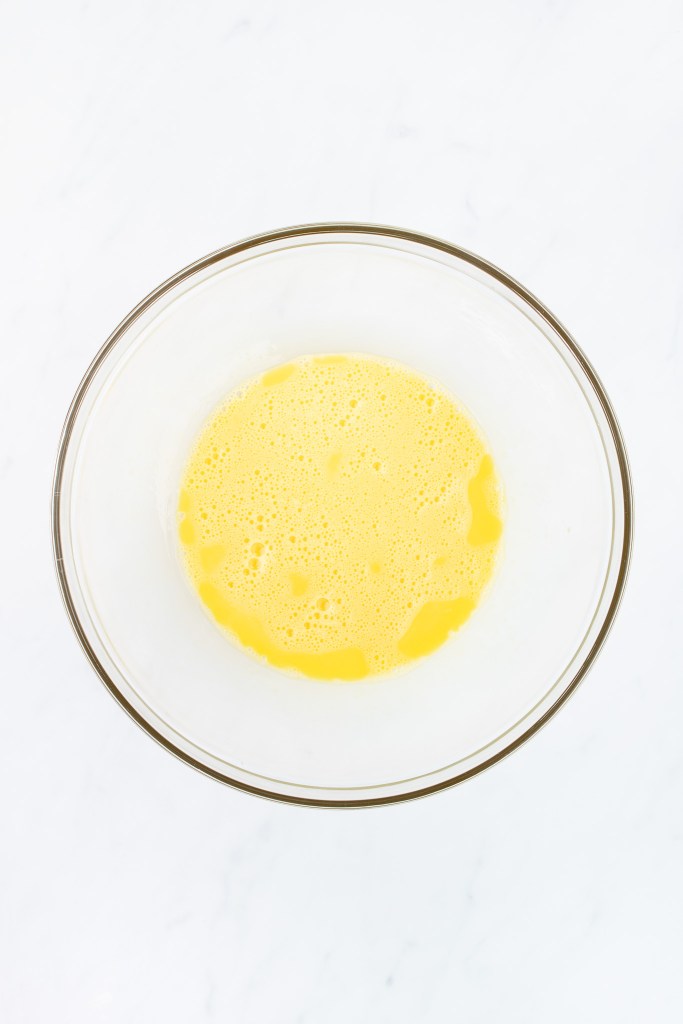
In a heavy-bottomed saucepan (not over heat), add in the sugar and lemon zest. Whisk together for 2 minutes. This helps extract some of the oil from the zest, giving the curd even more lemon flavor!


Add in the cornstarch and salt, and whisk together to combine.
Next, whisk in the water, followed by the lemon juice, and continue whisking until the cornstarch is completely dissolved.
Place the pan over medium heat. Whisk the mixture over heat until it thickens and becomes translucent and glossy. This will take about 10 minutes. Note: It won’t seem to do anything for a long time, but then it thickens very quickly!


Remove the pan from the heat and, while whisking vigorously, very slowly pour the mixture into the egg yolks. Be very careful not to pour too much of the hot mixture into the eggs at one time, as doing so may cook your eggs!

Pour the mixture back into the saucepan and return it to the heat. Continue to heat, while whisking constantly, until it thickens. It should reach about 165℉ on a digital thermometer.
Remove the mixture from the heat and whisk in the chilled butter.
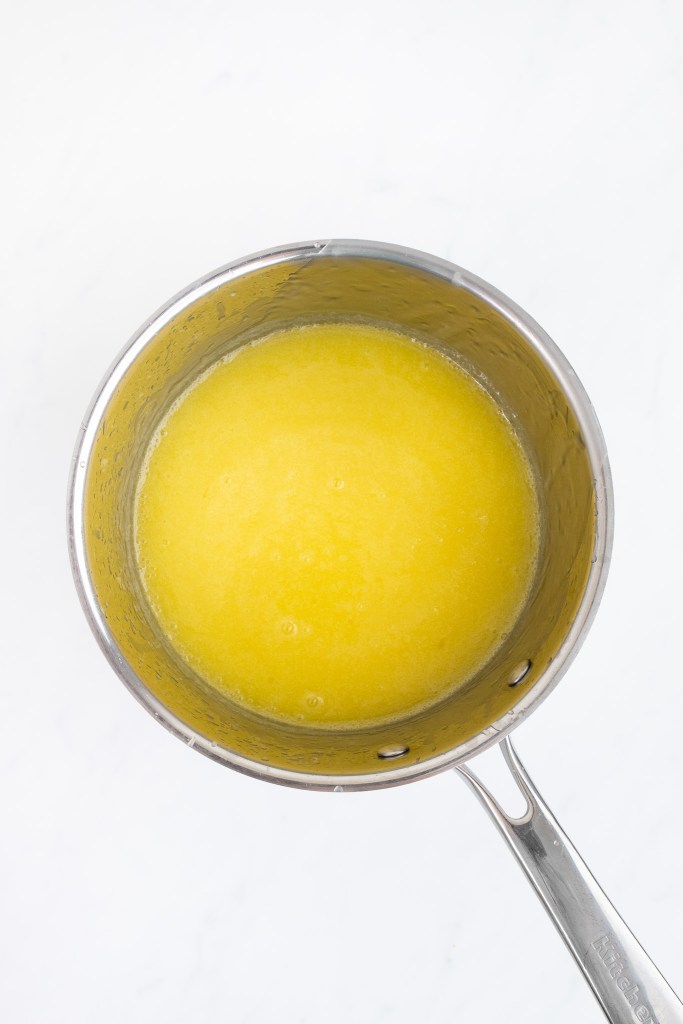
Immediately pour the hot curd into your pie shell and cover the top with a piece of plastic wrap. This helps keep the curd warm, as well as prevents a skin from forming on the surface.

PREPARING THE MERINGUE TOPPING
Working quickly, combine the sugar and cornstarch in a small bowl and mix together until no lumps remain.
In the bowl of a stand mixer fitted with a wire whip attachment (or using an electric hand held mixer), beat the egg whites on medium-high speed for 30 to 60 seconds, until they begin to foam.
Sprinkle in the cream of tartar and salt, and continue to beat for about 60 seconds, until the egg whites have doubled in volume.
Slowly sprinkle in the sugar/cornstarch mixture, and then beat on high for about 3 to 5 minutes, until medium-stiff peaks.

ASSEMBLING AND BAKING THE PIE
Remove the plastic wrap and scoop the meringue on top of the curd. Using the back of a spoon, spread the meringue so that it touches the crust all around the pie. The goal here is to have the meringue stick to the crust so that it doesn’t shrink when cooling. Form small peaks in the meringue by swirling and lifting your spoon in a circular motion. You will want to work as quickly as possible in this step.
Place the pie on the bottom rack of the oven and bake for 15 to 20 minutes, until the meringue turns golden brown.


Remove the pie from the oven and allow it to cool completely on a wire rack.
Once cooled, place the pie in the fridge and chill it for at least 4 hours.

Classic Lemon Meringue Pie
Ingredients
For the Pie Crust
- Pie dough (click here for my homemade Flaky Pie Crust recipe, of which you will only need ½ for this recipe)
For the Lemon Curd Filling
- 2 whole eggs, at room temperature
- 4 egg yolks, at room temperature (use egg whites for meringue topping)
- 1 ¼ cup granulated sugar
- 1 Tbsp lemon zest
- ¼ cup cornstarch
- ¼ tsp kosher salt (I use Diamond Crystal)
- ¾ cup water
- ¾ cup freshly squeezed lemon juice (about 4 lemons) (this is my absolute favorite citrus juicer)
- ¼ cup (½ stick) unsalted butter, chilled and cut into ½" cubes
For the Meringue Topping
- 4 egg whites, at room temperature (use egg yolks for lemon curd filling)
- ½ cup granulated sugar
- 1 Tbsp cornstarch
- Heaping ¼ tsp cream of tartar
- ⅛ tsp kosher salt
Instructions
Preparing the Pie Dough (skip if using store-bough pie shell)
- Place chilled pie dough on a well-floured surface. Using a floured rolling pin, roll out dough into a circle about 1" larger in diameter than the pie dish. Keep rotating the dough to prevent sticking.
- Carefully transfer rolled-out dough onto a 9" pie dish. Gently press dough into bottom and side edges of dish to form the crust, as desired.
- Fold outside edge of dough under itself to form a thicker crust, pressing gently. Chill in freezer for 5 minutes.
Blind-baking the Pastry Dough
- For store-bought pie shell: Pre-bake according to instructions on package.
- For homemade pastry dough: Preheat oven to 400ºF. With a fork, prick the bottom layer of pastry dough inside the dish. Place aluminum foil against the surface of the dough and gently press into bottom and inner edges. Using baking beans or pie weights, weigh down the aluminum foil. Bake for about 20 minutes. Remove the aluminum foil and baking beans (or pie weights) and bake until crust is lightly golden brown (about 8 to 10 minutes more).
- Set aside and allow to cool before filling.
Preparing the Lemon Curd Filling
- Reduce oven temperature to 350℉.
- Into two separate bowls, carefully separate egg yolks from egg whites. Set egg whites aside.Pro tip: Egg yolks and egg whites separate easier when cold. Once separated, allow to come to room temperature before proceeding.
- In a large bowl, whisk together whole eggs and egg yolks until uniform (about 30 seconds). Set aside.2 whole eggs, at room temperature4 egg yolks, at room temperature
- In a heavy-bottomed saucepan (not over heat), add in sugar and lemon zest. Whisk together to extract some of the oil from the zest (about 2 minutes).1 ¼ cup granulated sugar1 Tbsp lemon zest
- Add in cornstarch and salt. Whisk together to combine.¼ cup cornstarch¼ tsp kosher salt
- Pour in water, followed by the lemon juice. Whisk until cornstarch is completely dissolved.¾ cup water¾ cup freshly squeezed lemon juice
- Set saucepan over medium heat. Whisk constantly until mixture thickens and becomes translucent and glossy (about 10 minutes). Note: mixture will thicken very suddenly around the 10-minute mark.
- Remove pan from heat. Whisking constantly, very slowly pour the hot lemon mixture into the bowl with the whisked eggs. (Be careful not to overheat mixture, as eggs may scramble.)
- Pour the final mixture back into the saucepan and set it back over medium heat. Whisk constantly until mixture thickens and reaches an internal temperature of 165℉ (about 3 to 5 minutes).
- Remove saucepan from heat. Whisk in chilled butter.¼ cup (½ stick) unsalted butter, chilled and cut into ½" cubes
- Immediately pour hot lemon curd into your prepared pie shell. To keep the curd warm and prevent a skin from forming on the surface, cover top with a piece of plastic wrap.
- Set pie aside, at room temperature, and work quickly to prepare the meringue.
Preparing the Meringue Topping
- In a small bowl, combine sugar and cornstarch. Mix together until no lumps remain. Set aside.½ cup granulated sugar1 Tbsp cornstarch
- In the bowl of a stand mixer fitted with a wire whip attachment (or using an electric hand mixer), beat egg whites on medium-high speed until they begin to foam (about 30 to 60 seconds).4 egg whites, at room temperature
- Sprinkle in cream of tartar and salt. Continue to beat until the egg whites have doubled in volume (about 60 seconds more).Heaping ¼ tsp cream of tartar⅛ tsp kosher salt
- Slowly sprinkle in sugar/cornstarch mixture. Increase mixing speed to high and continue to beat egg whites until medium-stiff peaks form (about 3 to 5 minutes).
Assembling and Baking the Pie
- Working quickly, remove plastic wrap from lemon curd-filled pie and scoop meringue on top. Using the back of a spoon, spread meringue to edges of pie (so that it touches the crust on all sides). Form small peaks in the meringue by swirling and lifting the spoon, as desired.
- Set pie on the bottom rack of the oven. Bake until the meringue turns golden brown (about 15 to 20 minutes).
- Remove pie from oven and allow to cool completely on a wire rack. Once cooled, chill pie in the refrigerator for at least 4 hours.
Notes
- Whip the merging just to glossy, stiff-medium peaks — no more and no less.
- Set the meringue directly onto the hot curd, which helps the meringue adhere to the curd.
- Spread the meringue to the edges of the pie, so that it touches the crust on all sides, which helps to seal in any moisture and prevent the meringue from shrinking.
- Avoid under-baking the pie, otherwise condensation may occur, leading to liquid pooling between the curd and the meringue.
- Allow the pie to cool completely before chilling, otherwise condensation may again occur, leading to liquid pooling between the layers of the pie.
- Add cornstarch to the meringue (I use 1 Tbsp), which helps to counteract weeping and absorb any excess moisture.