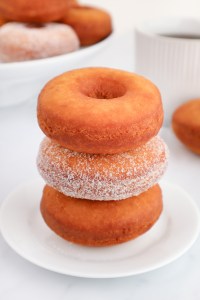
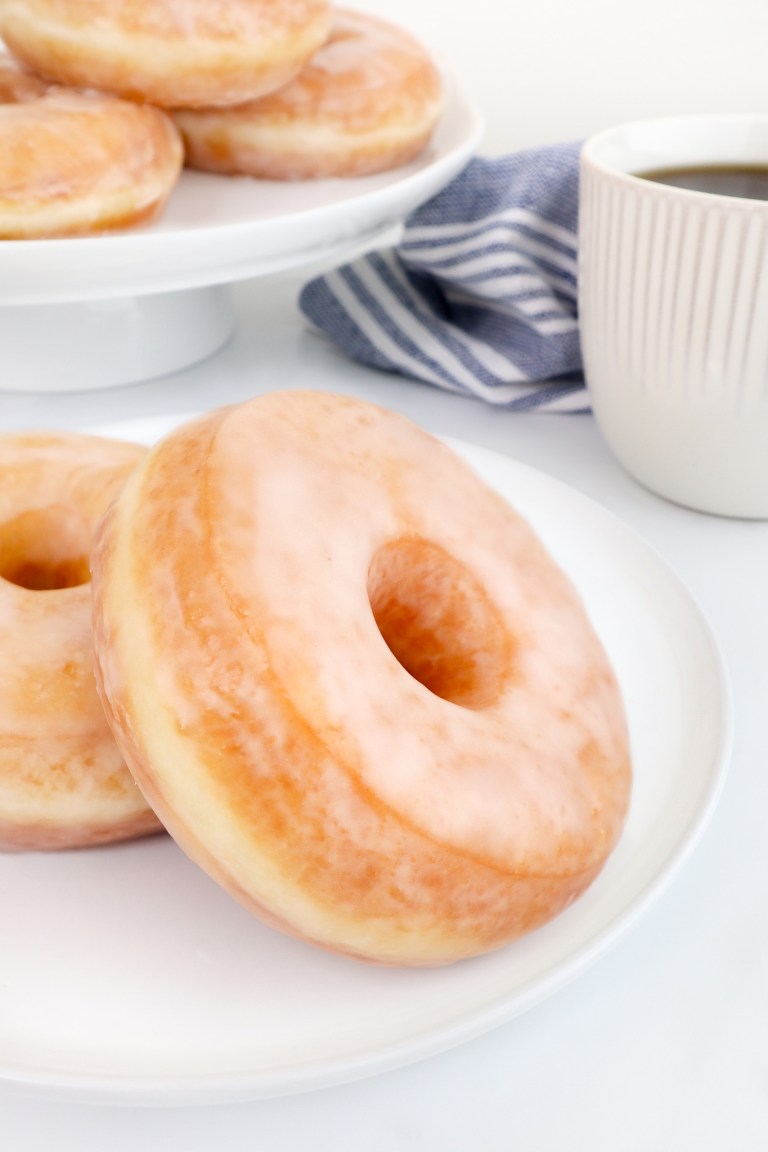
While donuts may seem simple, getting them just right can be tricky. After countless rounds of testing, I developed this recipe to reliably deliver donut shop-style results at home. The secret is a carefully balanced and enriched dough that’s slowly risen in the fridge to develop flavor, producing a soft, pillowy donut. Proper proofing and careful frying ensure that the donuts stay light and fluffy — featuring that signature white ring — and aren’t dense, heavy, or greasy.
Frequently Asked Questions:
What is the difference between yeast donuts and cake donuts?
Yeast donuts are made with a dough that contains yeast, which causes the dough to rise and develop an airy, light texture, much like bread dough. Cake donuts, on the other hand, are made without yeast and instead rely on baking powder or baking soda for leavening, resulting in a denser, more cake-like texture.
How do I get my yeast donuts to have that signature white ring?
The white ring you see along the side of a donut is where the oil doesn’t touch the sides when frying. This ultimately comes down to buoyancy: a dense donut sinks, while a light, airy donut floats on top of the oil. The best way to achieve that signature white ring is to use a soft dough that has properly proofed before frying, ensuring that the donut floats rather than sinks.
Can I make yeast donuts without a stand mixer?
Yes, you can make donuts without a stand mixer, though I don’t recommend it if you have the choice. Kneading an enriched dough by hand can be tedious, and incorporating the butter is more challenging — but not impossible!
How long does it take yeast donuts to rise?
This recipe uses only 1 teaspoon of active dry yeast, which slows the rising time to allow more flavor development. For the first rise, I recommend letting the dough slowly rise in the fridge for at least 4 hours, but ideally overnight. This not only enhances flavor, but also makes the dough firmer and less sticky, so it’s easier to work with.
For the proofing stage (after cutting the donuts out), the rising time will depend on your kitchen’s temperature, but generally takes about 60 to 90 minutes. During this time, the dough should puff up and nearly double in size.
How do I know when my donuts are proofed?
For this recipe, I find the best way to tell if the donuts are properly proofed is by their appearance: they should be roughly double in size and look puffy and light. You can also gently press the surface of the dough with your finger. The dough should slowly spring back and leave a small indent. If the dough springs back very quickly, the donuts are under-proofed and need more time. If it doesn’t spring back at all, they may be over-proofed. That said, I do find the finger test a bit tricky with such a soft, pillowy dough.
Can I make yeast donuts ahead of time?
Yes, you can absolutely make yeast donuts ahead of time and store them in an airtight container to keep them fresh. That said, yeast donuts are best enjoyed fresh from the fryer! For the best results, I recommend making the dough the night before and letting it rise overnight in the fridge. Then, the next day, you can shape, proof, and fry them with less prep!
What oil is best for frying donuts?
The best oil for frying donuts is a neutral oil like vegetable oil, canola oil, or peanut oil. Keep in mind that the oil you use can impart flavor to your donuts, so it’s best to avoid any strong-flavored oils.
Why did my donuts turn out dense or greasy?
Dense donuts usually result from under-kneaded dough or insufficient proofing time. Both factors prevent the dough from developing enough airiness.
Greasy donuts often happen when the oil temperature is too low, causing the donuts to absorb excess oil, or if they sit in the oil for too long.
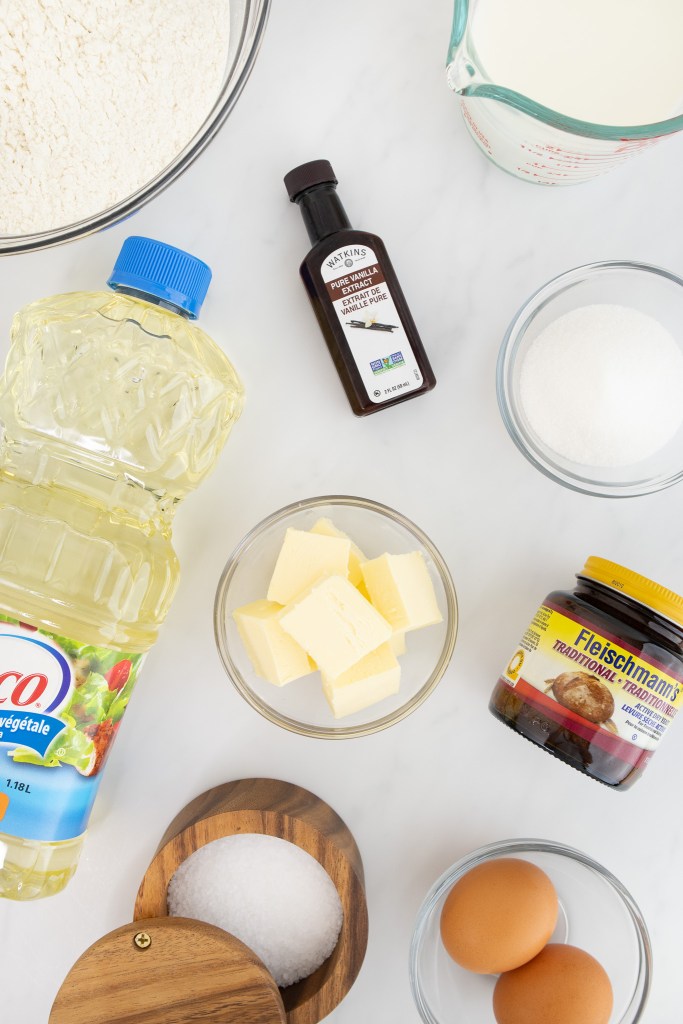
How to Make Yeast Donuts
Proofing the Yeast
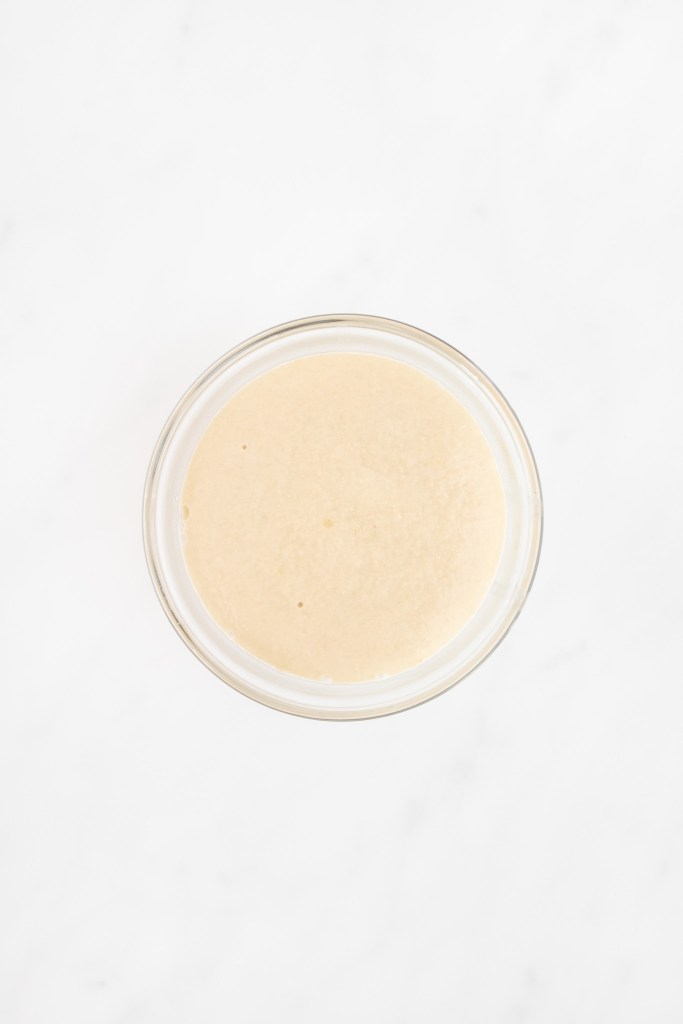
In a small bowl or glass measuring cup, stir together the tepid water, sugar, and yeast. Set aside for about 5 minutes, until the yeast dissolves and the mixture begins to foam.
Preparing the Yeast Dough
In the bowl of a stand mixer (fitted with the dough hook attachment), add in the flour, salt, and nutmeg, and whisk together to combine.
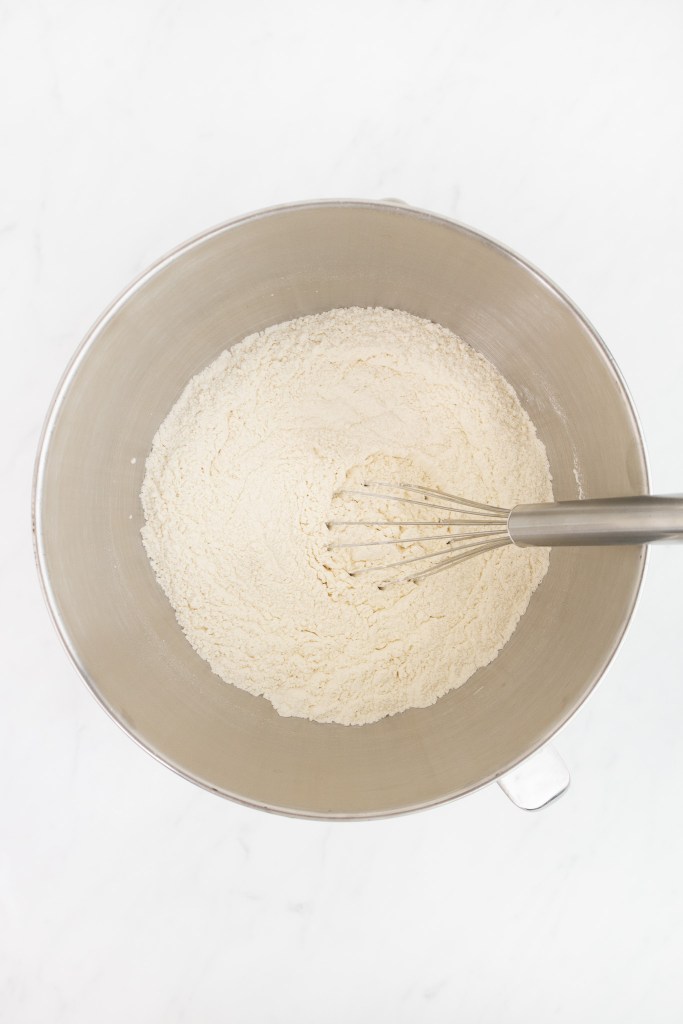
In another small bowl or glass measuring cup, whisk together the eggs, sugar, tepid milk, and vanilla.

Pour your liquid mixture and yeast mixture into the bowl of your stand mixer (with the flour, salt, and nutmeg), and stir to combine with a rubber spatula until there are no large patches of flour. This will give your dough hook a head start!
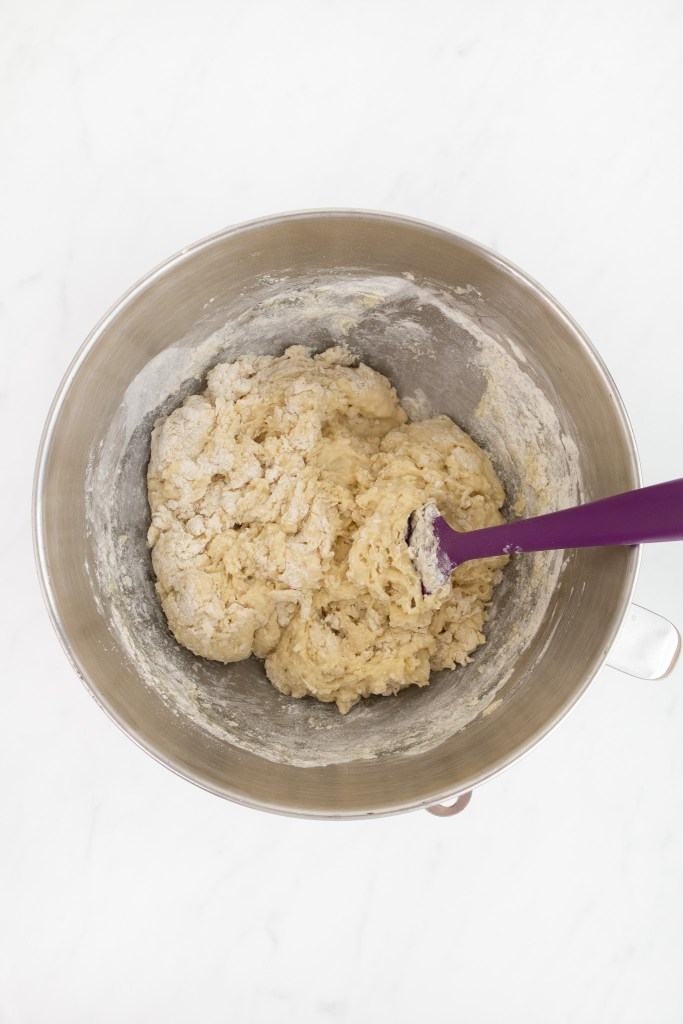
Then, mix on medium-low speed for about 5 to 8 minutes, until the dough becomes smooth, elastic, and pulls away from the sides of the bowl. Note: If the dough continues to stick to the sides of the bowl of your mixer, add in an additional 1 to 2 Tablespoons of flour.
Add in the cubed butter, a couple of pieces at a time, and continue to mix for about 10 to 15 minutes, until all of the butter has been fully incorporated into the dough. The dough may appear a bit gummy at first, but should pull away from the sides as the butter continues to incorporate. You may also have to scrape down the sides of the bowl, as necessary. The final dough should be tacky but not overly sticky. If it is, you can sprinkle in a bit more flour.
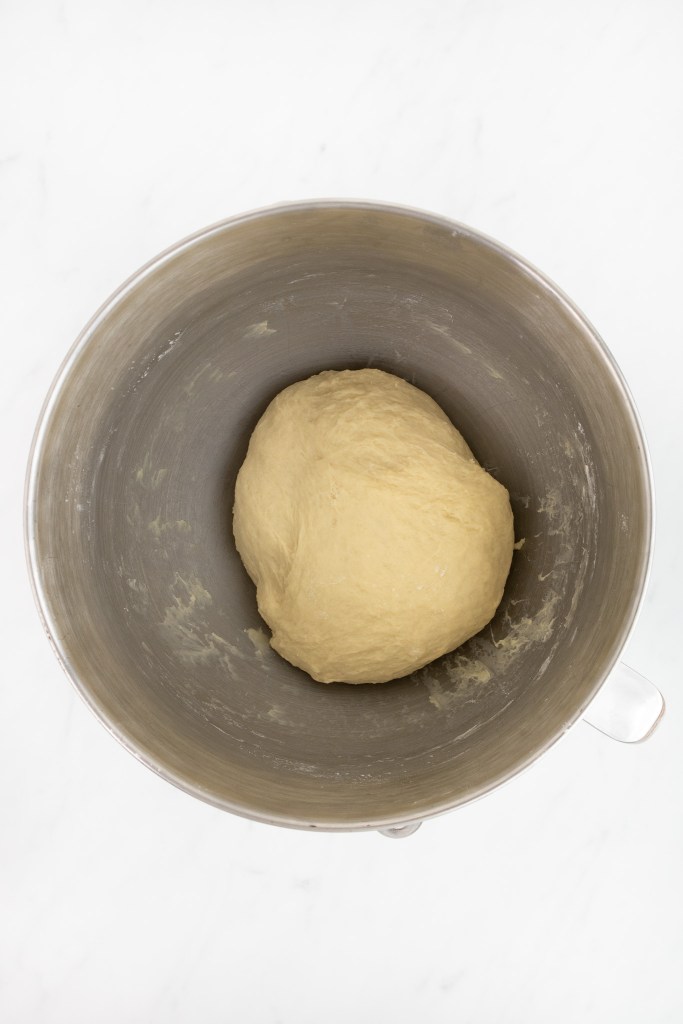
In the meantime, grease a large bowl with a bit of vegetable oil and set aside.
Remove the dough from the bowl of your mixer and form it into a smooth ball by folding it in your hands 2 to 3 times. It should be very soft and floppy, and not overly sticky — this ensures your donuts will come out soft and pillowy. Place it into the greased bowl and cover it with plastic wrap. Allow to rise at room temperature for 30 minutes and then into the fridge for at least 4 hours, but ideally overnight.


Shaping and Proofing the Donuts
Before removing your dough from the fridge, cut out 12 to 15 squares of parchment paper about 4” x 4”, place them on a baking sheet, and lightly brush each square with vegetable oil. This will make it easier to handle the donuts after they have risen and prevent them from deflating or losing their shape. Note: If your parchment paper is curling, you can lightly grease your pan first to help the paper stick in place.
Once the dough has chilled, remove it from the bowl, place it on a floured surface, and shape it into a rough rectangle shape with your hands, pressing all of the air out of the dough as you shape it.
Using a floured rolling pin, roll the dough out into a rectangular shape that is about 13” by 10”. Note: To roll dough into a rectangular shape, it is easiest to place your rolling pin in the centre of the dough and roll outward towards each corner in an “X” formation.

Using a 3” cutter and a smaller 1” cutter, cut out the donut shapes.
Pro tip: Try to cut your donut shapes as close together as possible to make the most out of your dough. You can form the dough back into a ball, re-roll it out, and cut out more donuts; however, these donuts will rise unevenly and likely come out misshapen when fried.

Place one donut on each square of parchment paper on your prepared baking sheet.
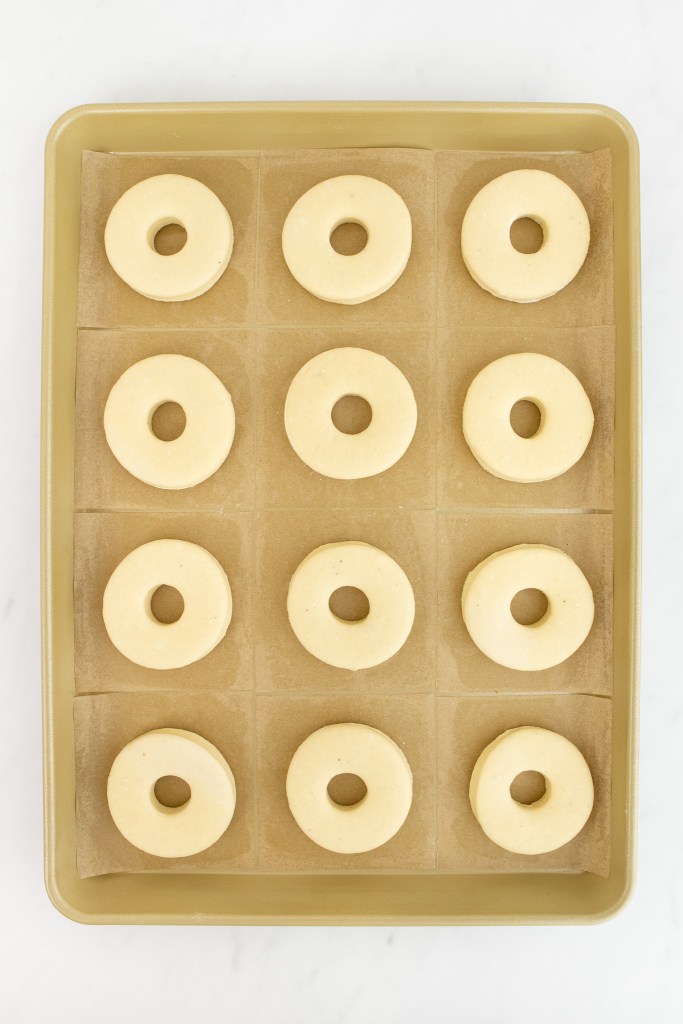
Place the baking sheet into your oven. Next, place a cake pan into your oven below the donuts and pour a cup of boiling water into the cake pan. This will create steam in your oven to help your donuts rise. Close the oven door and allow the donuts to rise for 60 to 90 minutes, until puffy and doubled in size.
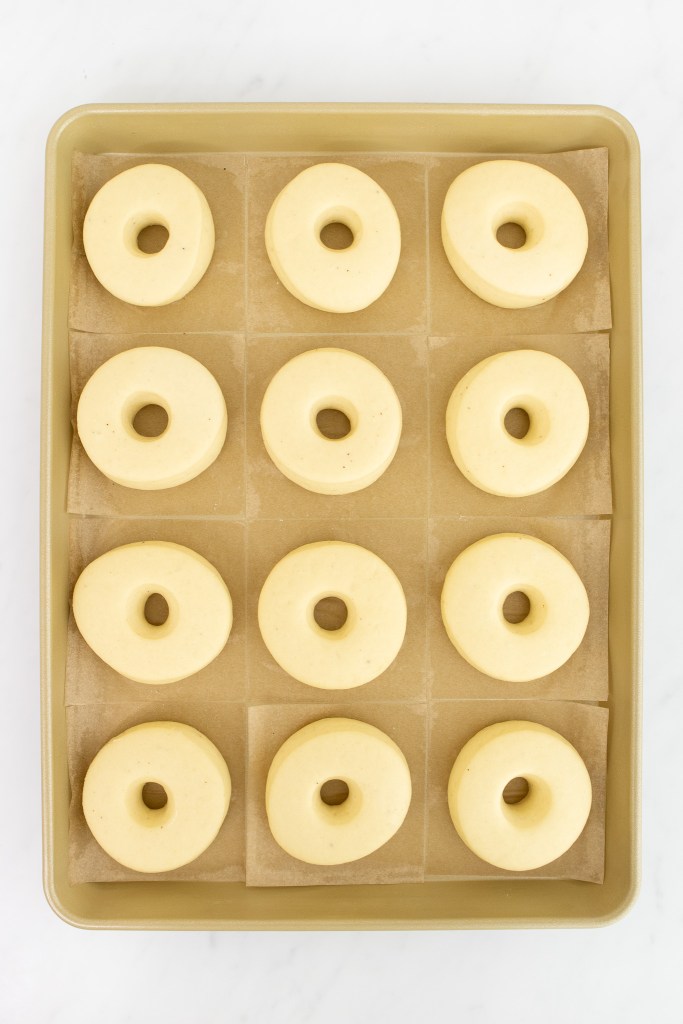
Near the end of your proofing time, heat up a large pot or Dutch oven with at least 2 inches of vegetable oil to 350–360℉.
Frying the Donuts
Prepare a sheet pan covered with a wire cooling wrack and paper towel to catch excess oil once your donuts are fried. Set aside.
Important: In my experience testing, I’ve found the proofing step to be one of the most crucial for getting the perfect bakery-style donuts with that signature white ring around the edge. Before proceeding, make sure the donuts have puffed up and almost doubled in size so that they will float in the oil and not be heavy and dense.
Once your oil is between 350℉ and 360℉, fry the donuts one side at a time until lightly golden brown on each side. I recommend testing one donut first to ensure they are properly proofed before frying the rest, which you can do in batches of 3 to 4 at a time (depending on the size of your pot).
Place the cooked donuts on your prepared wire rack.

Glazing the Donuts
Prepare a second sheet pan with a wire rack over the top. Set aside.
In a large bowl, whisk together the powdered sugar, hot water, vanilla, and salt until smooth and well combined.
Dip each donut into the glaze, turning it over and swirling it around to coat all sides. Allow the glaze to drain for a few seconds over the bowl before transferring the donut to your prepared sheet pan with wire rack.

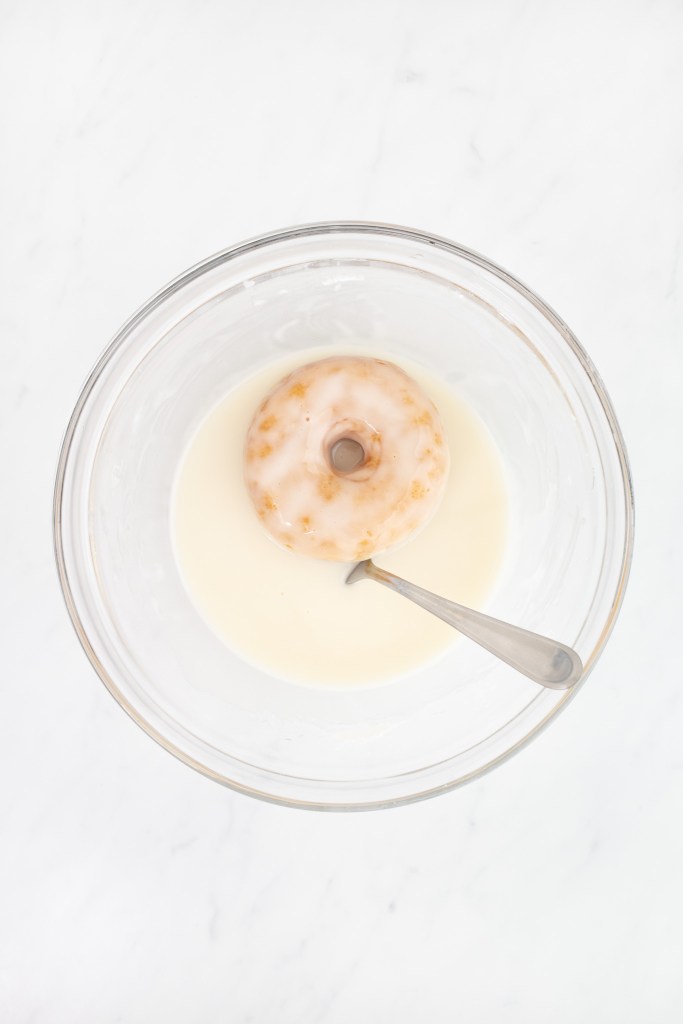
Allow the glaze to set for at least 20 minutes before serving. At this point, the glaze should be no longer tacky and should crack when pressed.
Storing the Donuts
Donuts are best served within the first 24 hours of frying. Without the added preservatives and dough conditioners that many donut shops use, they will begin to stale very quickly. For best results, store them in an airtight container at room temperature.
Yeast Donuts (Donut Shop Style)
Ingredients
For the Yeast Mixture
- ¼ cup tepid water (100–110℉)
- 1 Tbsp granulated sugar
- 1 tsp active dry yeast (*less than 1 packet*)
Dry Ingredients
- 4 ½ cups all-purpose flour
- 1 ½ tsp kosher salt (I use Diamond Crystal)
- ¼ tsp ground nutmeg
Wet Ingredients
- 2 large eggs, at room temperature
- ⅓ cup granulated sugar
- 1 cup whole milk, tepid
- 1 tsp pure vanilla extract
For Mixing into the Dough
- 8 Tbsp unsalted butter, at room temperature and cut into ½" cubes
For the Glaze
- 3 cups powdered (icing) sugar
- ⅓ cup hot water
- ¼ tsp pure vanilla extract
- ¼ tsp kosher salt
Equipment
Instructions
Proofing the Yeast
- In a small bowl or glass measuring cup, mix tepid water, sugar, and yeast. Set aside until the yeast dissolves and the mixture begins to foam (about 5 minutes).¼ cup tepid water1 Tbsp granulated sugar1 tsp active dry yeast
Preparing the Yeast Dough
- In the bowl of a stand mixer fitted with the dough hook attachment, combine flour, salt, and nutmeg. Whisk together to combine.4 ½ cups all-purpose flour1 ½ tsp kosher salt¼ tsp ground nutmeg
- In another small bowl or glass measuring cup, whisk together the eggs, sugar, tepid milk, and vanilla.2 large eggs, at room temperature⅓ cup granulated sugar1 cup whole milk, tepid1 tsp pure vanilla extract
- Into the bowl of the stand mixer with the dry ingredients, pour in the liquid mixture and the proofed yeast mixture. Before turning the mixer on, with a rubber spatula, stir until there are no large patches of flour. (This will give your dough hook a head start!)
- Mix on medium-low speed until the dough is smooth, elastic, and pulls away from the sides of the bowl (about 5 to 8 minutes).Note: If the dough continues to stick to the sides of the bowl, add in an additional 1–2 Tbsp of flour and continue mixing.
- While continuing to mix, add in the cubed butter — a few pieces at a time — until all of the butter has been fully incorporated into the dough (this will take some time; about 10 to 15 minutes).Note: Don't get discouraged! The dough may appear gummy at first, but should eventually pull away from the sides of the bowl as the butter incorporates into the dough. (You may also need to scrape down the sides of the bowl from time to time.) The final dough should feel tacky, but not overly sticky. If it's too sticky, sprinkle in a little more flour, as needed.8 Tbsp unsalted butter, at room temperature and cut into ½" cubes
- Meanwhile, lightly grease a large bowl with vegetable oil and set it aside.
- Remove the dough from the bowl and form it into a smooth ball by folding it over itself 2 to 3 times with your hands. It should feel very soft and floppy, and not overly sticky — this ensures the donuts come out soft and pillowy.
- Place the dough into the greased bowl, cover with plastic wrap, and allow to rise at room temperature for 30 minutes. Then, chill the dough in the refrigerator it has doubled in volume (at least 4 hours, but ideally overnight).
Shaping and Proofing the Donuts
- Before removing the dough from the refrigerator, cut out 12–15 squares of parchment paper roughly 4" by 4" and set them on a baking sheet. Lightly brush each square with vegetable oil. This will make it easier to handle the donuts after they have risen and will prevent them from deflating or losing their shape.Note: If the parchment paper starts to curl, lightly grease the baking sheet first to help the paper stick in place.
- Once the dough has chilled, turn it out on a floured surface. Gently shape it into a rough rectangle with your hands, pressing out all of the air as you go.
- Using a floured rolling pin, roll out the dough into a rectangle about 13” by 10”.Note: For an even rectangle, start with the rolling pin in the center of the dough and roll outward towards each corner in an “X” formation.
- Using a 3” cutter and a smaller 1” cutter, cut out the donut shapes.Pro tip: Cut the donut shapes as close together as possible to make the most out of the dough. You can gather the scraps, reshape them into a ball, and re-roll out the dough, but keep in mind that these donuts will likely rise unevenly and come out misshapen when fried.
- Place one donut on each square of parchment paper (on the prepared baking sheet). Then, set the baking sheet into the oven — which should still be turned off!
- Place a cake pan on the oven rack below the donuts and carefully pour 1 cup of boiling water into it. (This will create steam to help your donuts rise.) Close the oven door and allow the donuts to proof until they are puffy and have doubled in size (about 60 to 90 minutes).Pro tip: From my testing, the proofing step is crucial to achieving perfect bakery-style donuts with that signature white ring around the edge. Make sure the donuts have fully puffed up and doubled in size before frying — this ensures that they'll float properly in the oil and won't turn out heavy or dense.
- Near the end of the proofing time, in a large pot or Dutch oven, heat at least 2" of vegetable oil to 350–360℉ on a candy thermometer.
Frying the Donuts
- Prepare a sheet pan lined with a wire cooling rack and paper towels (to catch excess oil after frying the donuts). Set aside.
- Once the vegetable oil reaches 350–360℉, fry the donuts until lightly golden brown on each side. (I recommend testing one donut first to ensure it has properly proofed before frying the rest, which you can do in batches of 3 to 4 at a time depending on the size of your pot.)
- Set each fried donut on the prepared wire rack to drain and cool.
Glazing the Donuts
- Prepare a second sheet pan lined with a wire cooling rack. Set aside.
- In a large bowl, whisk together powdered sugar, hot water, vanilla, and salt until smooth and well combined.3 cups powdered (icing) sugar⅓ cup hot water¼ tsp pure vanilla extract¼ tsp kosher salt
- Dip each donut into the glaze, turning it over and swirling it around to coat all sides. Allow the excess glaze to drip back into the bowl for a few seconds, then transfer the donut to the prepared sheet pan with the wire rack.
- Allow the glaze to set for at least 20 minutes, until it's no longer tacky and cracks slightly when pressed, before serving.
Storing the Donuts
- Donuts are best served within 24 hours of frying them. Without the added preservatives and dough conditioners used in many donut shops, they begin to stale very quickly. For best results, store them in an airtight container at room temperature.