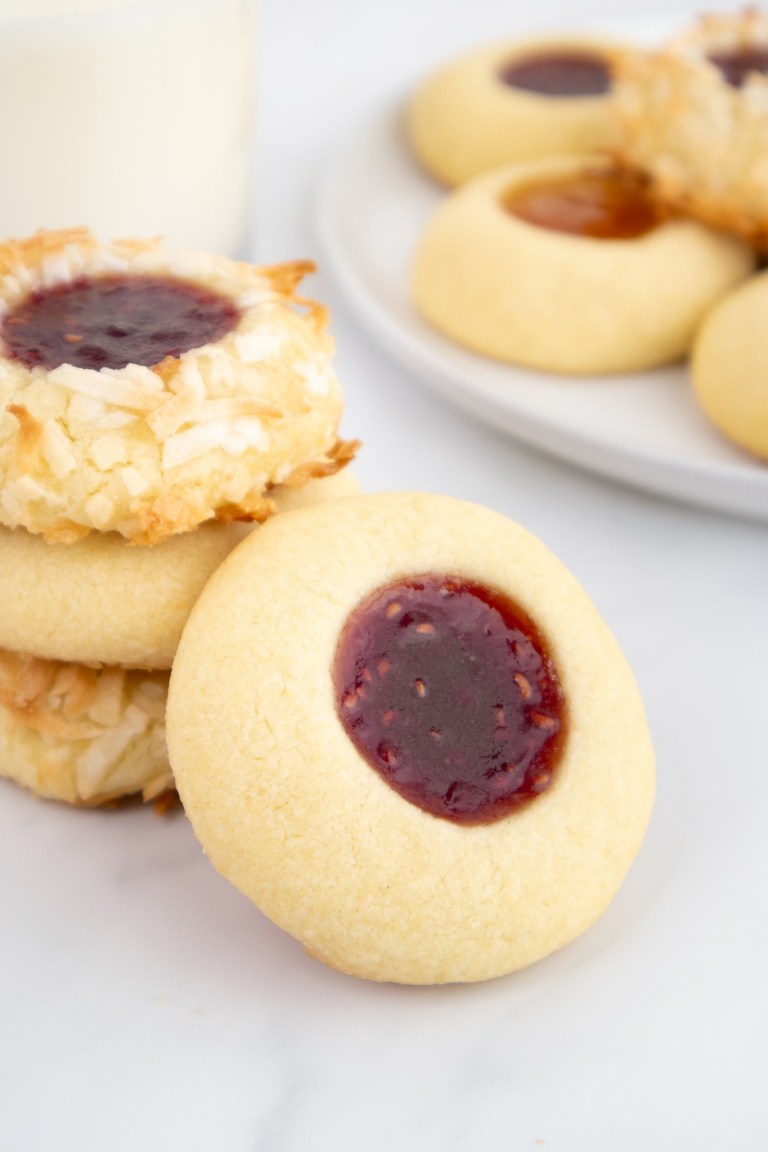
Thumbprint cookies are super easy to make with ingredients you likely already have in your pantry. They come together in just a few minutes and can be frozen either unbaked or baked, making them a great make-ahead treat for any holiday spread. My only tip: make sure the dough is well-hydrated to prevent cracking, and chill the cookies until firm so they hold their shape and don’t spread during baking.
FAQ
Why do my thumbprint cookies crack when I bake them?
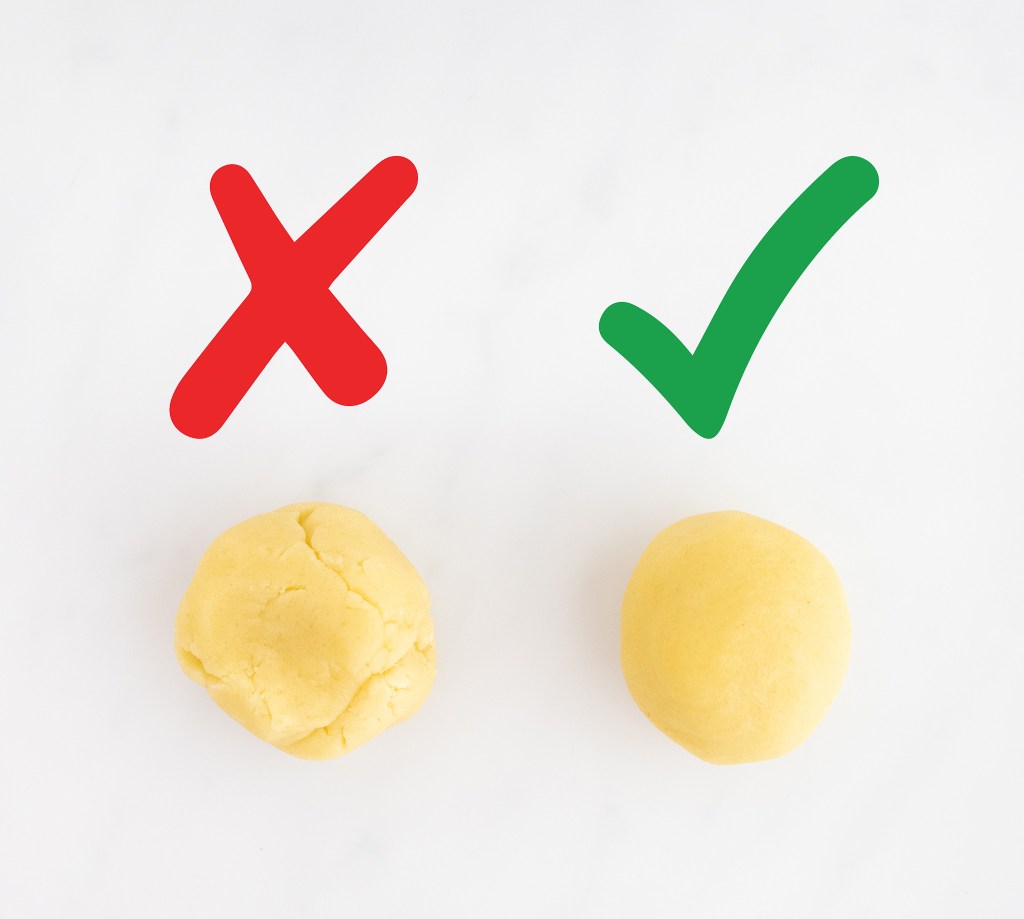
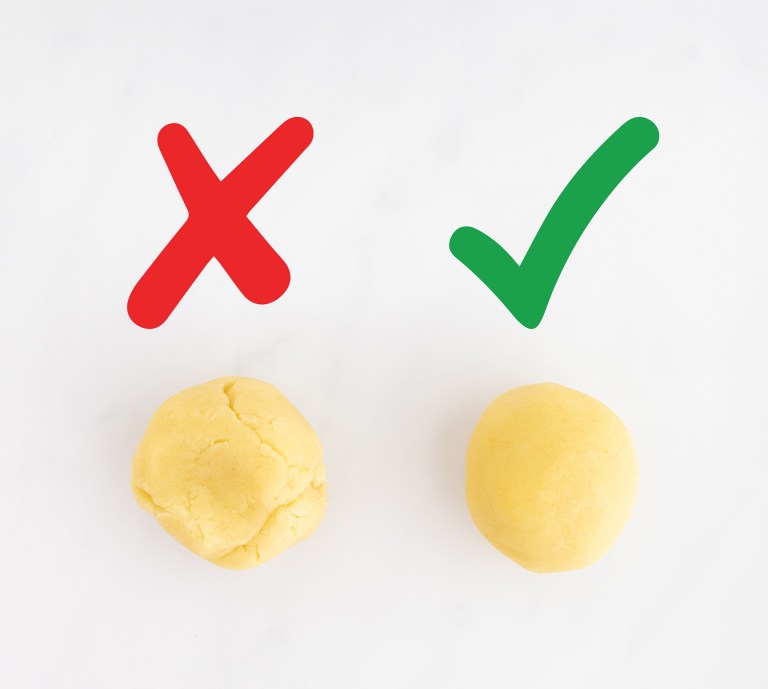
Thumbprint cookies often crack during baking if there’s too much flour in the dough. The key to preventing cracking is ensuring the dough is properly hydrated before baking. After mixing the dough, take a small portion and roll it into a ball with your hands — it should form a perfectly smooth ball. If the dough cracks when rolled or pressed, add a few sprinkles of milk (or water) to your dough and continue to mix for a few seconds just until combined.
What is the best jam to use for thumbprint cookies?
You can use any jam or fruit preserves you like. However, since thicker jams can sometimes be a bit tricky to scoop, I recommend giving them a quick stir to loosen them up and make them easier to work with.
How do I keep thumbprint cookies from spreading too much?
To keep thumbprint cookies from spreading, chill the shaped cookie dough in the fridge or freezer until firm before spooning the jam on top and baking them. Cold dough helps the outside of the cookies set faster in the oven, creating a barrier that helps them hold their shape.
Can I make thumbprint cookie dough ahead of time and freeze it?
Absolutely! To freeze unbaked thumbprint cookies, roll and shape the dough, then place the cookies on a lined baking sheet and freeze for about 1 hour, or until firm. Once firm, transfer the cookies to an airtight container or freezer bag. When you’re ready to bake, simply place the frozen cookies on a lined baking sheet, fill the indentations with jam, and bake at 350°F until the bottom edges just begin to turn light golden brown.
How can I make my thumbprint cookies soft, rather than dry and crumbly?
Thumbprint cookies can become dry and crumbly if too much flour is added or if they’re overbaked. For soft, tender cookies, add just enough flour so the dough is easy to roll without sticking to your hands. Then, bake the cookies just until the bottoms are lightly golden — overbaking will cause them to dry out.

FREEZING INSTRUCTIONS
To freeze unbaked cookies:
Roll and shape the dough, then place the cookies on a lined baking sheet, and freeze until solid (about one hour). Transfer the cookies to an airtight container or freezer bag. When ready to bake, place the frozen cookies on a lined baking sheet, fill the centers with jam, and bake at 350°F until the bottom edges turn a light golden brown.
To freeze baked cookies:
Let the cookies cool completely on a wire rack. Once cooled, place them in an airtight container in a single layer. If stacking, separate each layer with parchment or wax paper to prevent sticking. When ready to serve, allow them to thaw at room temperature until soft.

How to Make Thumbprint Cookies
Prepare two baking sheets or sheet pans with parchment paper or silicone baking mats.
In a large bowl, whisk together the flour and salt. Set aside.

In the bowl of a stand mixer fitted with the paddle attachment, mix the butter and sugar together on medium speed until well combined.
Next, add in the egg yolks, vanilla, and almond extract (optional), and continue to mix at medium speed just until everything is incorporated, scraping the sides of the bowl and paddle attachment with a rubber spatula as necessary.

With the mixer on low, add in the flour and salt mixture (half at a time) until just combined, again scraping down the sides of the bowl and paddle attachment as necessary.

At this point, remove a small portion of the dough and roll it into a ball with your hands, if the dough is dry and cracked, add in a tablespoon of milk (or water) to the dough a mix until just combined. On the other hand, if the dough is very sticky, you can sprinkle in an additional tablespoon of flour. The goal is to be able to roll the dough into smooth balls that don’t show any cracking.
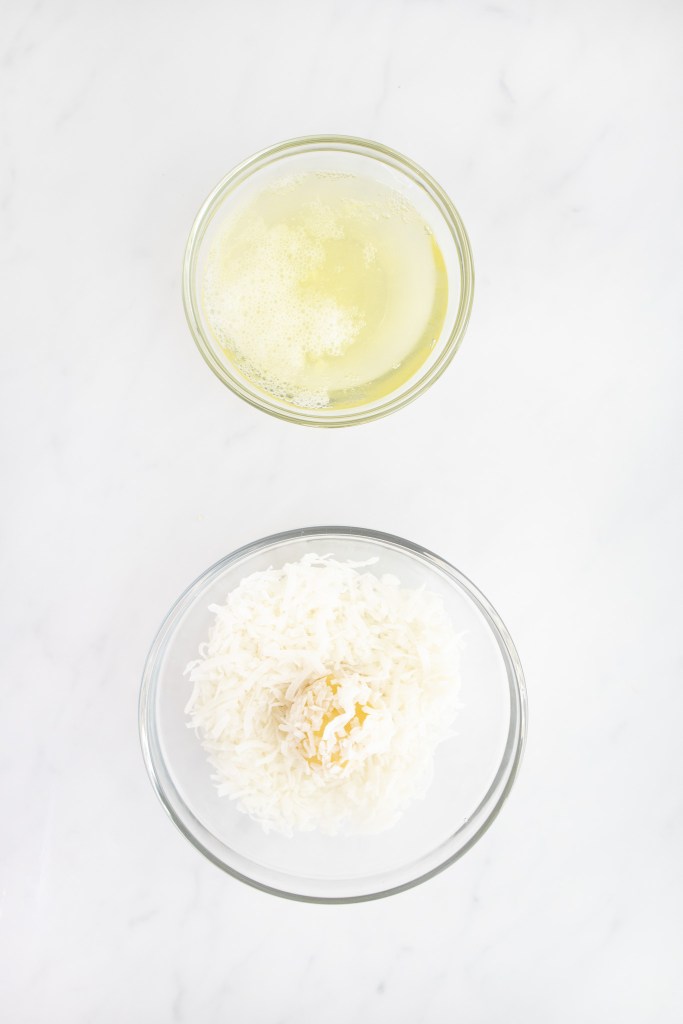
If coating your cookies in either coconut or finely chopped nuts, prepare your egg wash by whisking together the egg whites and water in a small bowl. Additionally, prepare a second small bowl with whichever topping you are going to roll your cookies in.
Once the dough is just the right consistency, roll the dough out in 1¼ to 1½ inch smooth balls (about 28 to 30 grams each). Dip each ball into your egg wash and then your coconut/chopped nuts and place each cookie on a baking sheet at least 2 inches apart.
If not coating your cookies, simply roll the dough out in 1¼ to 1½ inch smooth balls (about 28 to 30 grams each) and place each cookie on a baking sheet at least 2 inches apart.
Using your thumb, or the back of a ½ teaspoon measure, gently press an indentation into the top of each cookie.
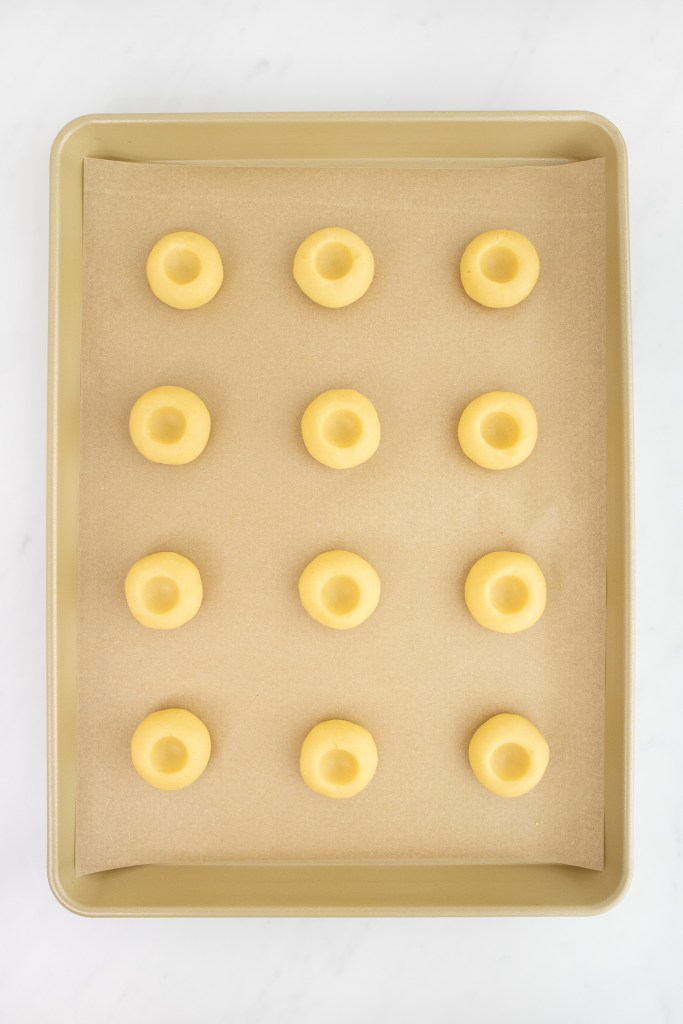
Place the formed cookies into the freezer to chill for 25 minutes (or in the fridge for 1 hour) until they are firm to the touch.
Preheat your oven to 350℉.
Remove the cookies from the freezer/fridge and spoon ½ tsp of jam into each.
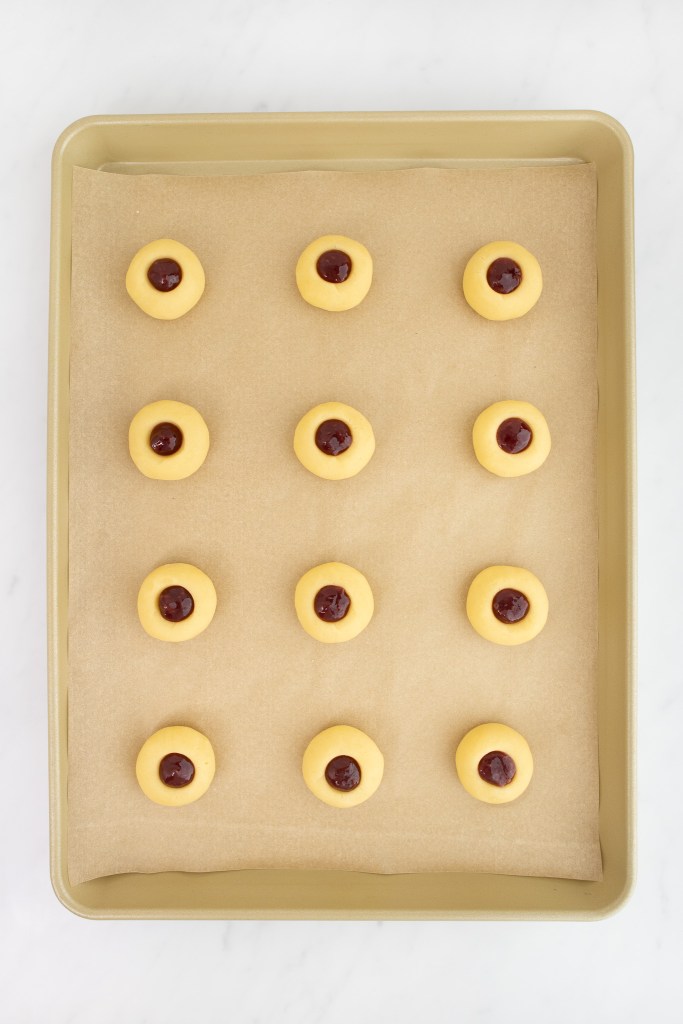
Place the baking sheet (one batch at a time) into the centre of your preheated oven for 15 to 20 minutes, or until just beginning to turn a light golden color along the edge touching the pan. Do not overbake!
Pro tip: Bake time will vary depending on how cold your pan/cookies were when you placed them into the oven as well as the specific personality of your oven — so start checking on them around the 15-minute mark! My oven takes 18 minutes exactly.

Once fully baked, remove the cookies from the oven and allow them to cool for 5 minutes on the pan before transferring to a wire rack to cool completely. Store the cookies in an airtight container for up to 5 days.

Thumbprint Cookies
Ingredients
- 1 cup (2 sticks) unsalted butter, at room temperature
- ⅔ cup granulated sugar
- 2 egg yolks, at room temperature (reserve egg whites if rolling in coconut or chopped nuts)
- 1 tsp pure vanilla extract
- ½ tsp almond extract (optional)
- 2 ¼ cups all-purpose flour
- ½ tsp kosher salt (I use Diamond Crystal)
- ⅓ cup jam (I like St. Dalfour Red Raspberry Fruit Spread)
For the Optional Coating (to Roll the Cookies in)
- 2 egg whites
- 1 ½ Tbsp water
- 1 cup shredded coconut or chopped nuts (e.g. walnuts, pecans, or pistachios)
Equipment
Instructions
- Line two baking sheets (or sheet pans) with parchment paper or silicone baking mats.
- In a large bowl, whisk together the flour and salt. Set aside.2 ¼ cups all-purpose flour½ tsp kosher salt
- In the bowl of a stand mixer fitted with the paddle attachment, cream the butter and sugar together on medium speed until well combined.1 cup (2 sticks) unsalted butter, at room temperature⅔ cup granulated sugar
- Add in the egg yolks (reserving the egg whites if coating the cookies), vanilla, and almond extract (if using). Continue mixing on medium speed just until incorporated, scraping down the sides of the bowl and paddle attachment with a rubber spatula as needed.2 egg yolks, at room temperature1 tsp pure vanilla extract½ tsp almond extract (optional)
- Reduce the mixer speed to low. Add in the flour/salt mixture, half at a time, and mix just until combined, again scraping down the sides of the bowl and paddle attachment as needed.
- To test the dough, remove a small portion and roll it into a ball with your hands. If the dough is dry and cracked, add in a Tbsp of milk (or water) and mix just until combined. If the dough is very sticky, sprinkle in an additional Tbsp of flour. (The goal is to be able to roll the dough into smooth balls that don’t show any cracking.)
- If coating the cookies:Prepare the egg wash by whisking together the reserved egg whites and 1 ½ Tbsp water in a small bowl. Prepare the coating by measuring out the topping you wish to roll the cookies in (e.g., shredded coconut or chopped nuts).Portion out dough balls about 1 ¼" to 1 ½" wide (roughly 28 to 30 grams each). Dip each dough ball into the prepared egg wash, then roll in in your chosen topping, and set them on the prepared baking sheets at least 2" apart.
- If not coating the cookies:Portion out dough balls about 1 ¼" to 1 ½" wide (roughly 28 to 30 grams each) and set them on the prepared baking sheets at least 2" apart.
- Using your thumb or the back of a ½-teaspoon measure, gently press an indentation into the top of each dough ball.
- Chill the formed cookies on the baking sheets in the freezer for 25 minutes (or in the fridge for 1 hour) until firm to the touch.Pro tip: Once firm, you can also transfer them to an airtight container or freezer bag and keep them in the freezer for another day; see Notes below.)
- Preheat oven to 350℉.
- Remove the cookies from the freezer (or fridge) and spoon ½ teaspoon of jam into the indentation of each.
- Bake the cookies, one baking sheet at a time, in the center of the preheated oven until the edges begin to turn a light golden color (about 15 to 20 minutes). Be careful not to overbake!Pro tip: Baking time can vary depending on how cold the baking pan and cookies were when placed in the oven, as well as any quirks your oven may have. I recommend checking on them around the 15-minute mark. (For reference, my oven takes exactly 18 minutes!)
- Remove the cookies from the oven and allow them to cool for 5 minutes on the pan before transferring to a wire rack to cool completely. Serve at room temperature, or store in an airtight container for up to 5 days.
Notes
- Freezing Instructions:
-
- To freeze unbaked cookies: Roll and shape the dough, place the cookies on a lined baking sheet, and freeze until solid (about one hour). Transfer them to an airtight container or freezer bag. When ready to bake, place the frozen cookies on a lined baking sheet, fill with jam, and bake at 350°F until the bottom edges turn lightly golden.
- To freeze baked cookies: Let the cookies cool completely on a wire rack. Place them in an airtight container in a single layer. If stacking, separate each layer with parchment or wax paper to prevent sticking. When ready to serve, allow them to thaw at room temperature until soft.