The arrival of peach season is always bittersweet: while delicious, fresh peaches always mark the end of summer. Though, as a lover of all fruit desserts, it is certainly one of my favorite times of the year.
I tested a ton of different variations in developing this peach pie recipe. I set out to make the perfect peach pie — one that won’t result in a runny filling or soggy crust. I found that the warmth from the cinnamon and the addition of orange zest somehow make the peaches taste… peachier!
HOW TO CHOOSE THE BEST PEACHES FOR PEACH PIE
As with any fruit dessert, the flavor and sweetness of the final product relies heavily on the fruit itself. I try to choose peaches that are bright and ripe, but still slightly firm (not soft and mushy). The goal is to have peaches that are sweet and have a great flavor — that is, not underripe — but also firm enough to work with, so that they don’t completely disintegrate when baked.
HOW TO PREVENT A RUNNY PEACH PIE
For peach pie, it is imperative that you allow the final pie to cool completely; the filling needs time to thicken and set as it cools. Yes, this can be the ultimate test of will power (it will smell so delicious!), but it is a crucial step. Cutting into the pie while it is still hot will cause the filling to be runny.
HOW TO PREVENT A SOGGY PIE CRUST
With this recipe, I recommend macerating the peaches in sugar and cooking down the juices that exude before pouring the final result into the unbaked pie shell. This reduces the overall amount of liquid in the pie, helping to prevent that dreaded soggy bottom!
On top of this, the pie also needs to be baked long enough so that the bottom crust doesn’t end up being soft and gooey. If you are using a clear glass pie dish, you can very easily (and very carefully!) remove the pie from the oven and check the bottom of the crust to see whether it has baked long enough — you are looking for that nice, golden-brown color.
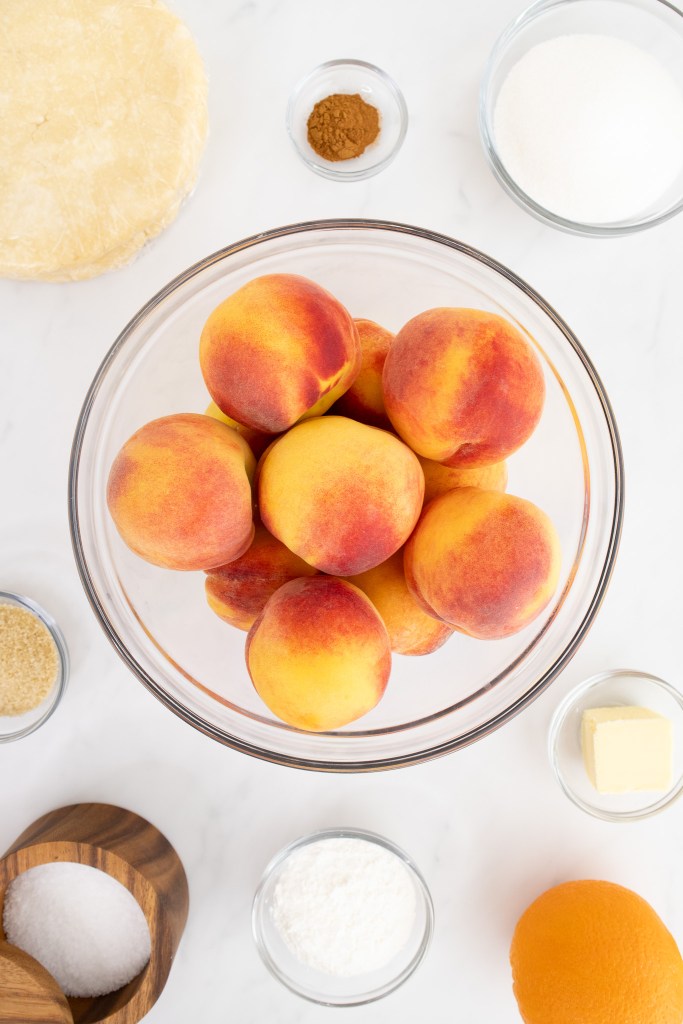
PREPARING THE PIE DOUGH
Prepare my homemade Flaky Pie Crust (click for recipe) and set both disks of dough in the refrigerator to chill.
PREPARING THE PEACH FILLING
Remove the skin from the peaches, cut them into ½” wedges, and place them into a large bowl.
Pro tip: There are several ways to remove the skin from your peaches. The simplest option would be to use a vegetable peeler or paring knife. If neither option is working, you can blanch the peaches in a pot of boiling water for a few seconds to loosen the skin. Then, simply peel the skin off using a paring knife or your fingers.
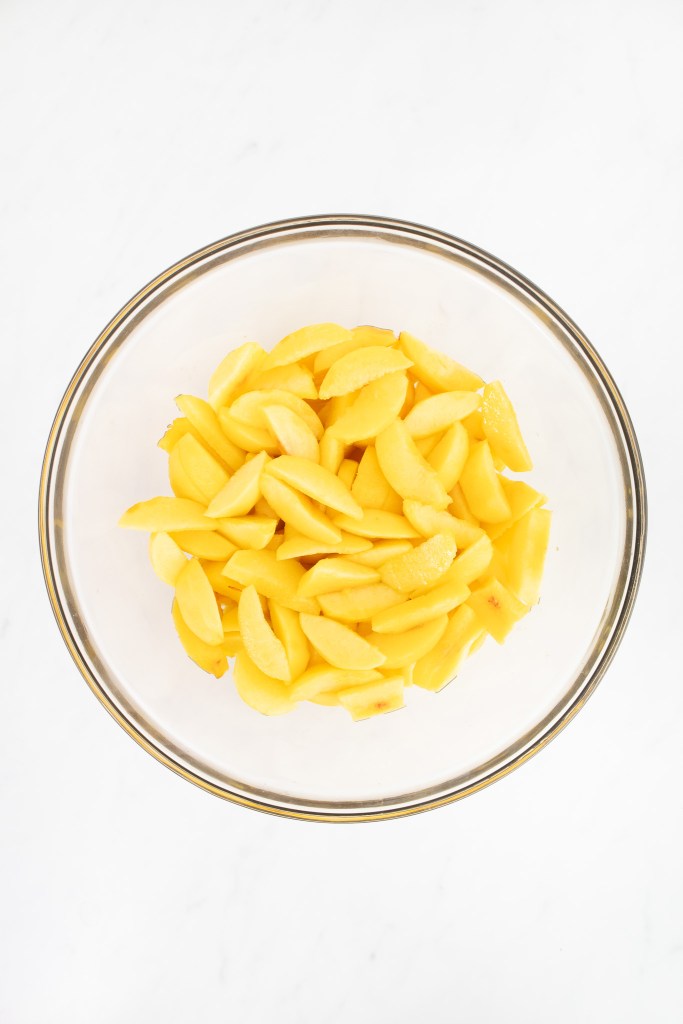
To the bowl of peach wedges, add in the granulated sugar and stir until most of the sugar has dissolved. Allow the peaches to sit and macerate for 1 hour (at room temperature), gently stirring them every 15 minutes or so. After one hour, the peaches will have exuded a lot of liquid.


Place a colander over a small frying pan and pour in the peaches and all of their juices. Allow the juices to drain into the frying pan for 5 minutes.
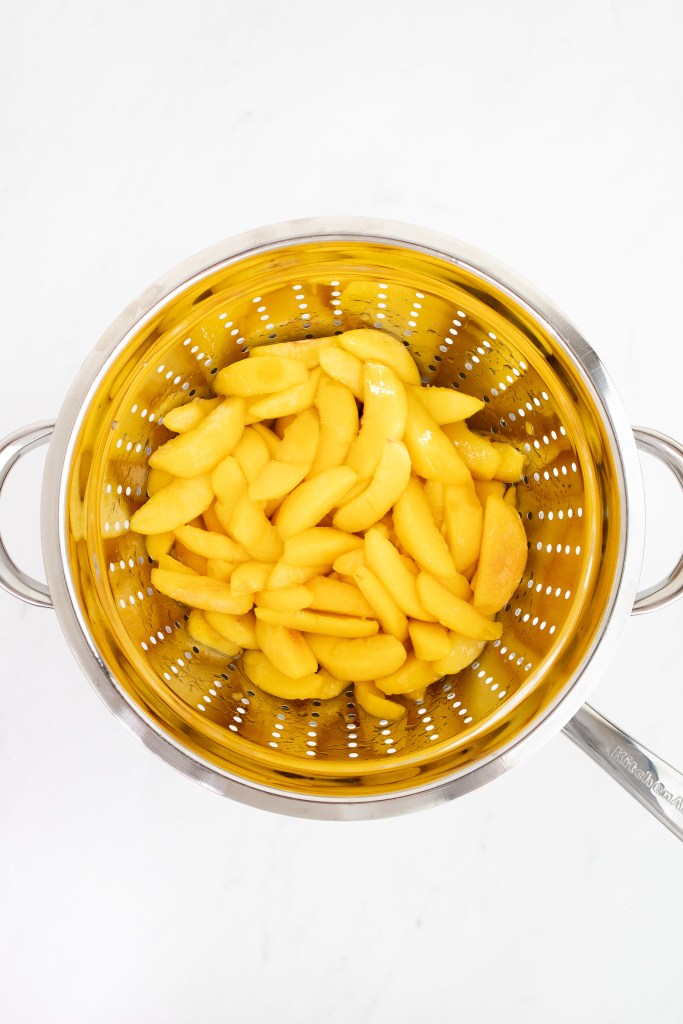
In the meantime, preheat your oven to 400℉. At the same time, line a sheet pan with parchment paper and place it in the center rack of the oven.
Pour the drained peaches back into the large bowl.
Place the frying pan over medium-high heat and reduce the peach juices until about ⅓ cup to ½ cup of thick peach liquid remains. The liquid will bubble and foam; that’s okay! You can always remove the pan from the heat at anytime to check the quantity and thickness of the liquid.


Remove the peach liquid from the heat and whisk in the orange juice, orange zest, cinnamon, and kosher salt. Next, add in the chilled butter and swirl it around until fully melted into the liquid. Finally, whisk in the cornstarch until no lumps remain.
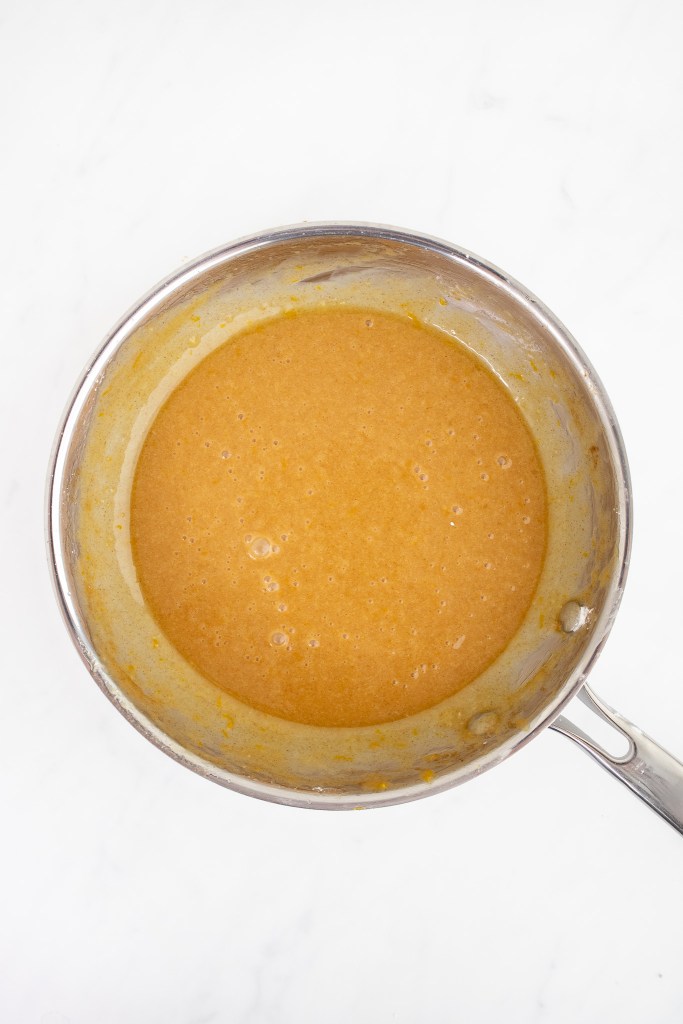
Set the liquid aside while rolling out the pie crust, but do not combine the liquid with the peach wedges yet — we will add them together later, just before adding them to the pie dish.
ASSEMBLING AND BAKING THE PIE
Remove both disks of pie dough from the fridge and place them on the counter to warm slightly. This will make them easier to roll out.
Prepare an egg wash by whisking together 1 egg with 1 Tablespoon of water until the mixture is homogeneous. Set aside.
Roll out one half of the pie dough onto a floured surface into a circle about 12″ in diameter. (At this point, the dough should still be chilled but pliable.) Be sure to keep moving and rotating the dough to prevent sticking. If the dough is still fairly cold, it may crack around the edges. Just pinch any cracks together with your fingers and continue rolling.
Carefully transfer the dough into a 9″ pie dish and gently press it into the bottom and sides. Don’t trim the edges of the dough. Place the entire pie plate into the fridge to chill while working with the second half of the dough.
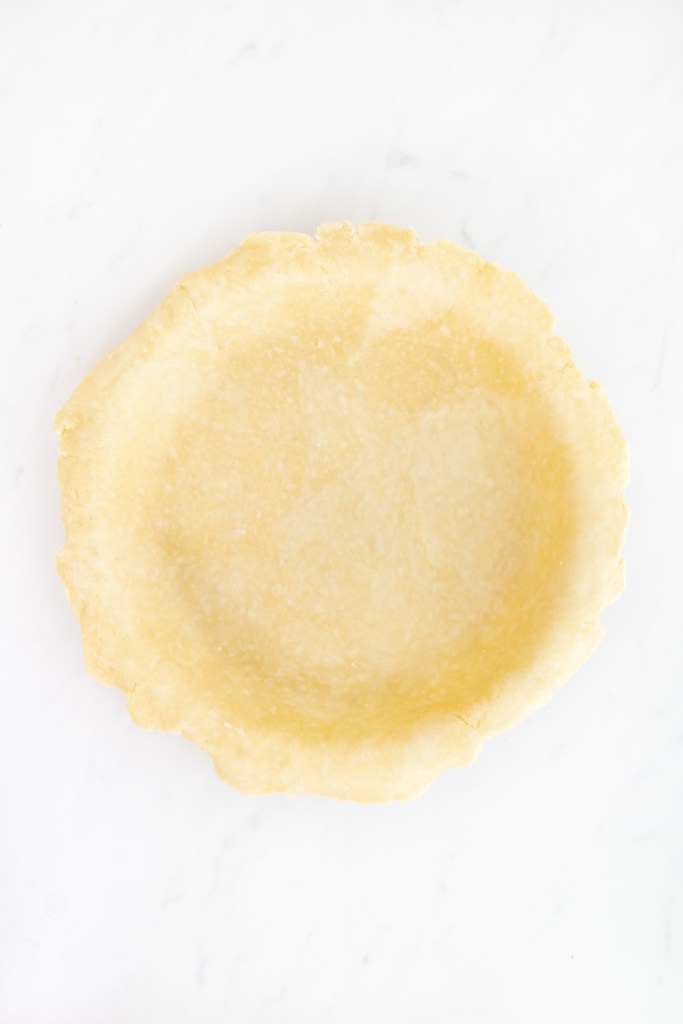
Working quickly (but carefully), roll out the second piece of pie dough onto a floured surface into another circle about 12″ in diameter. At this point you can decide whether you want to cover your pie with the entire piece of dough (the simpler option) or make a lattice pattern. If making a lattice-topped pie, cut the dough into 1″ strips (I recommend using a ruler as a guide and a large knife or pizza cutter).
When ready to fill you pie, pour the peach liquid into the bowl of peach wedges and stir with a spoon or rubber spatula until well combined.

Remove the pie dish from the fridge and pour the peach mixture into the pie dish.
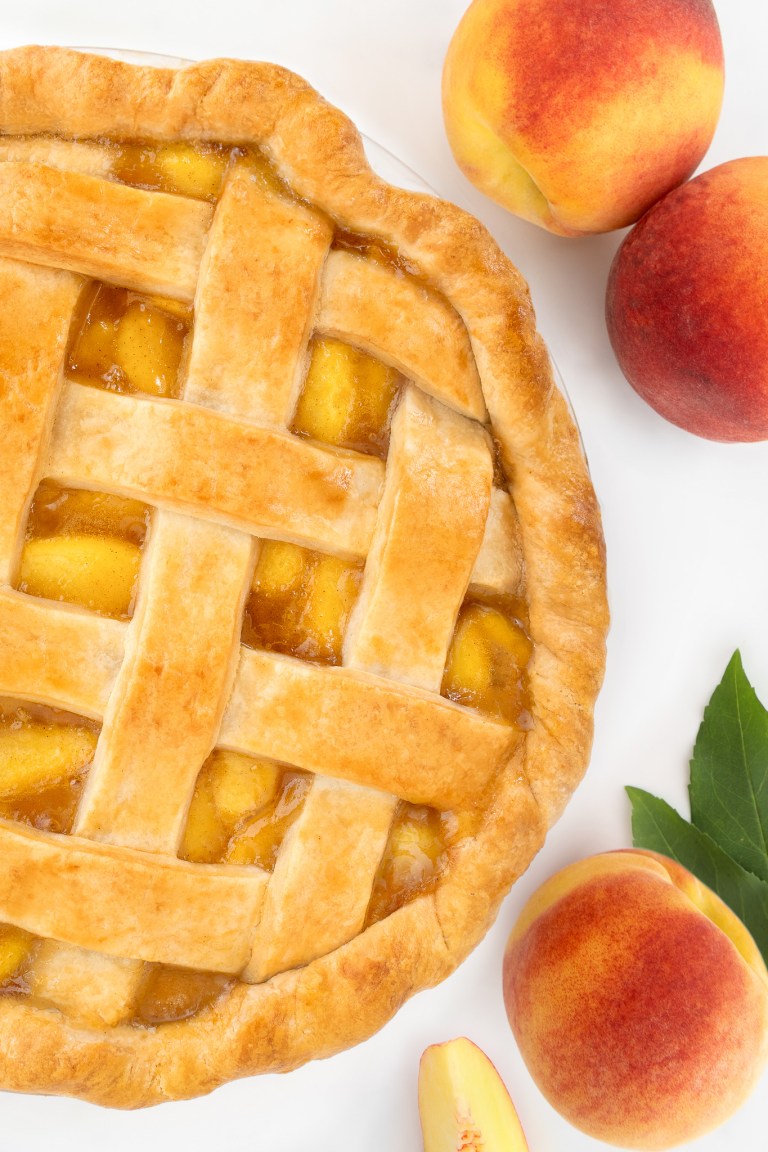
Place the second half of the crust on top of the pie (or weave the 1″ strips to form a lattice pattern). If using a full piece of dough for the top, remember to make slits in the dough for steam to escape while baking. Roll and crimp the edges of the pie using your fingers or a fork, trimming any excess dough as necessary. You can be as simple or as fancy as you’d like!


Using a pastry brush, lightly paint the top of the crust with the egg wash. If desired, sprinkle the top with Demerara or granulated sugar.
Place the pie onto the prepared sheet pan that has been heating up in the oven. Bake for 20 minutes, then turn the oven temperature down to 375℉ for another 45 to 55 minutes, or until the crust is nice and golden brown and the filling is thick and bubbly.
Pro Tip: If at any time during baking your crust is getting too dark, you can place a piece of aluminum foil over the top to prevent burning.
Remove the pie from the oven and place it on a cooling rack to cool completely (at least 4 hours). The filling will thicken and set as it cools. Remember: cutting the pie before it has cooled will likely result in a runny filling!
Perfect Peach Pie
Ingredients
- Pie dough (click here for my homemade Flaky Pie Crust recipe)
- 3 – 3.5 lbs peaches (about one 3L basket)
- ¾ cup granulated sugar
- 2 Tbsp freshly squeezed orange juice
- ½ tsp orange zest
- 1 tsp ground cinnamon
- ¼ tsp kosher salt (I use Diamond Crystal)
- 2 Tbsp unsalted butter
- ¼ cup cornstarch
- Demerara sugar or granulated sugar (for sprinkling; optional)
For the Egg Wash
- 1 large egg, at room temperature
- 1 Tbsp water
Equipment
Instructions
Preparing the Pie Dough
- Prepare my homemade Flaky Pie Crust recipe. Set both disks of dough in the refrigerator to chill.
Preparing the Peach Filling
- Using a vegetable peeler or paring knife, peel peaches. Alternatively, blanch peaches in a pot of boiling water for a few seconds (to loosen the skin) and peel off using a paring knife or your fingers. Cut peaches into ½" wedges.3 – 3.5 lbs peaches
- In a large bowl, combine peach wedges and sugar. Stir until sugar has dissolved. Set peaches aside to macerate, at room temperature, for 1 hour, gently stirring them every 15 minutes.¾ cup granulated sugar
- Pour peaches (and exuded liquid) into a colander set over a small frying pan. Allow to sit for 5 minutes for juices to drain into the pan.
- Meanwhile, preheat oven to 400℉. Line a sheet pan with parchment paper and set it in the center rack of the oven.
- Pour the drained peaches back into the large bowl. Set aside.
- Set the frying pan over medium-high heat and cook juices until only about ⅓ to ½ cup of thick peach liquid remains. (The liquid will bubble up and foam — this is okay! To check quantity and thickness, simply remove pan from heat for bubbles to subside.)
- Off heat, whisk in orange juice, orange zest, cinnamon, and salt. Add in chilled butter and swirl it around until fully melted and combined. Whisk in cornstarch until no lumps remain. Set peach liquid mixture aside while rolling out the pie crust. (Do not add liquid back to peach wedges just yet!)2 Tbsp freshly squeezed orange juice½ tsp orange zest1 tsp ground cinnamon¼ tsp kosher salt2 Tbsp unsalted butter¼ cup cornstarch
Assembling and Baking the Pie
- Meanwhile, remove both disks of chilled pie dough from the refrigerator and set them on the counter to warm slightly (this will make them easier to roll out). When rolling, the dough should be chilled, but pliable.
- Prepare an egg wash by whisking together 1 egg with 1 Tbsp of water until the mixture is homogeneous. Set aside.
- Place one disk of pie dough on a well-floured surface. Using a floured rolling pin, roll out dough into a circle about 12" in diameter. Keep rotating the dough to prevent sticking. Pinch any cracks together with your fingers.
- Carefully transfer rolled-out dough onto 9" pie dish. Gently press dough into bottom and side edges of dish to form the crust. Do not trim the edges of the dough. Set the entire pie plate in the fridge to chill while working with the second disk of dough.
- Working quickly (but carefully), repeat Step 11 with second disk of dough. If using full piece of dough as top layer, leave as is. However, if desired, cut dough into 1" strips — I recommend using a ruler as a guide and a large knife or pizza cutter — to create a lattice pattern.
- At the last minute, into the large bowl with the peach wedges, pour in the peach liquid mixture. With a spoon or rubber spatula, stir until well combined.
- Remove the prepared pie dish from the refrigerator. Pour peach filling into the bottom crust. Carefully drape the second half of the dough over the filled pie and cut small slits in the top dough to allow steam to escape while baking. Alternatively, if creating a lattice pattern, weave strips of dough over the filled pie, as desired.
- Using your fingers and/or a fork, roll and crimp the edges of the pie, as desired, trimming any excess dough as necessary. You can be as simple or as fancy as you would like!
- Using a pastry brush, lightly brush the top of the pie with the egg wash. Optionally, sprinkle the top with a little Demerara or granulated sugar.
- Set the pie onto the lined (and hot!) sheet pan in the oven. Bake for 20 minutes.
- After 20 minutes, reduce the oven temperature to 375℉. Bake pie for an additional 45 to 55 minutes, until the crust is golden brown and the filling is thick and bubbly (which will be visible if creating a lattice pattern).Pro Tip: If at any time during the baking process, the crust is becoming too dark, set a piece of aluminum foil over the top to prevent burning.
- Remove the pie from the oven and set it on a cooling rack. Allow to cool completely (at least 4 hours), otherwise the filling may become runny (the filling will thicken and set as it cools).
Notes
- Tips for Using Fresh Peaches: As with many fruit desserts, the flavor and sweetness of your pie will depend on the flavor and sweetness of your peaches. I recommend getting peaches that are ripe but slightly firm. (You can always taste a piece of peach for sweetness.)
- Quantity of Sugar: In this recipe, I use ¾ cup of granulated sugar, which I have found to be just the right amount of sweetness. Keep in mind that, when working with peaches, the added sugar not only provides sweetness to the final pie, but also helps bring out the peaches’ flavor.