Despite its reputation, Hollandaise is surprisingly simple to make. It requires only a handful of staple ingredients you likely already have in your kitchen. This recipe follows the classic restaurant-style preparation, though you can always be creative and adjust any seasoning to suit your taste. Just remember: the technique is what really matters here.
Traditional Method vs. Blender Hollandaise
This recipe uses the traditional stovetop method for making Hollandaise. You can prepare it using either a double boiler (highly recommended for beginners) or a carefully monitored heavy-bottomed saucepan placed directly over low heat.
I prefer the double boiler method because it provides gentle, even heat and makes it much easier to control the temperature. It also allows you to keep the sauce warm while finishing the rest of your meal, without the risk of overheating or curdling.
Many modern recipes rely on a blender, which is a perfectly acceptable alternative. However, I personally prefer the hands-on control of the stovetop method… and I don’t love the extra setup and cleanup that comes with using a blender!
FAQ
How do you fix broken or split Hollandaise sauce?
If your Hollandaise sauce looks greasy, separated, or curdled, it is likely because it was overheated or the butter was added into the yolks too quickly.
There are two ways you can fix your broken sauce:
Option 1: Warm Water Method
- Place 1 Tablespoon of warm (not hot) water in a clean bowl.
- Slowly whisk the broken sauce into the water, a little at a time.
- Keep whisking until smooth and creamy.
Option 2: Fresh Yolk Method
- Whisk 1 fresh egg yolk in a clean bowl.
- Very slowly drizzle in the broken sauce while whisking constantly.
- The fresh yolk helps re-emulsify everything.
Note: If you overheated your sauce too much, you may have cooked the eggs. In this case, you can try passing the sauce through a sieve. It may not look perfect, but it will still taste great. (Don’t be discouraged!)
Can you make Hollandaise sauce ahead of time?
Yes, you can make Hollandaise sauce ahead of time. However, for the best results, I only recommend making it about an hour in advance. You can keep it warm in a double boiler over very low heat. To prevent bacteria growth, do not leave Hollandaise sauce at room temperature for extended periods of time.
Alternatively, you can make it ahead of time, then store it in the fridge (in an airtight container) for up to 2 days.
Can you reheat Hollandaise sauce?
To reheat Hollandaise sauce, place your leftover sauce in a double boiler (a heatproof bowl over a pan of simmering water on low heat), and continue whisking until warmed through. If the sauce is too thick, you can add in warm water, 1 teaspoon at a time, until you achieve the correct consistency. Just remember to keep your heat low and slow!
Can you make Hollandaise without a double boiler?
Absolutely. Using the classic method (without a blender), you can make the sauce directly in a heavy-bottomed saucepan. Just make sure to use low heat, whisk constantly, and remove the pan from the heat entirely if you feel the mixture is getting too hot. I also find it useful to have a couple of small cubes of cold butter nearby, which you can add in to quickly lower the temperature in an emergency.
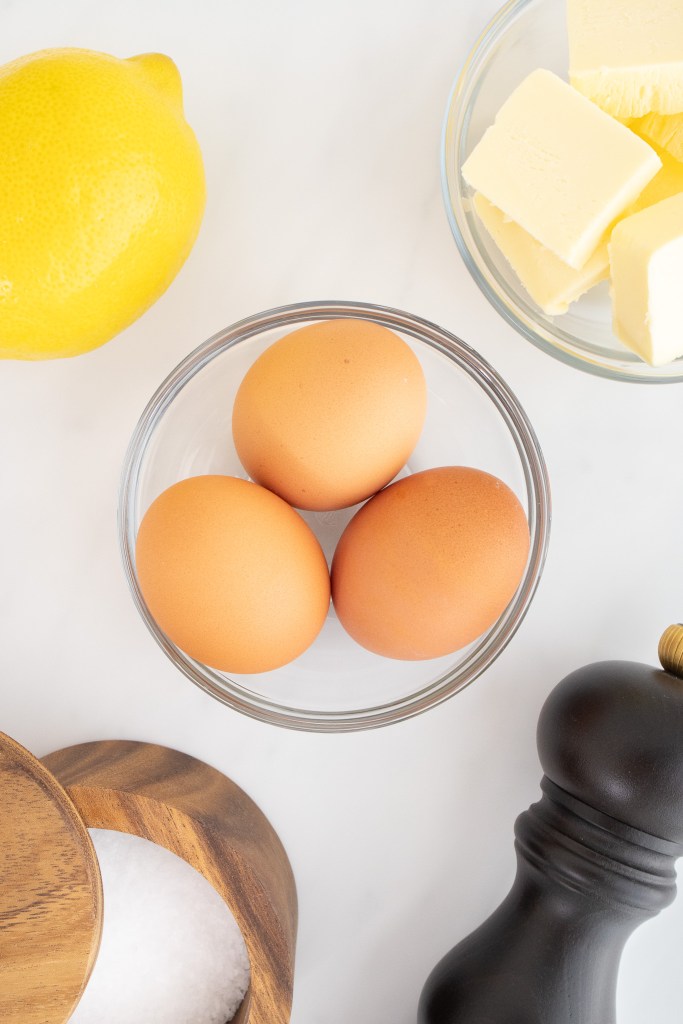
How to Make Hollandaise Sauce
Melt the butter and set it aside.
Place a medium sauce pan filled with 1 to 2 inches of water over low heat.
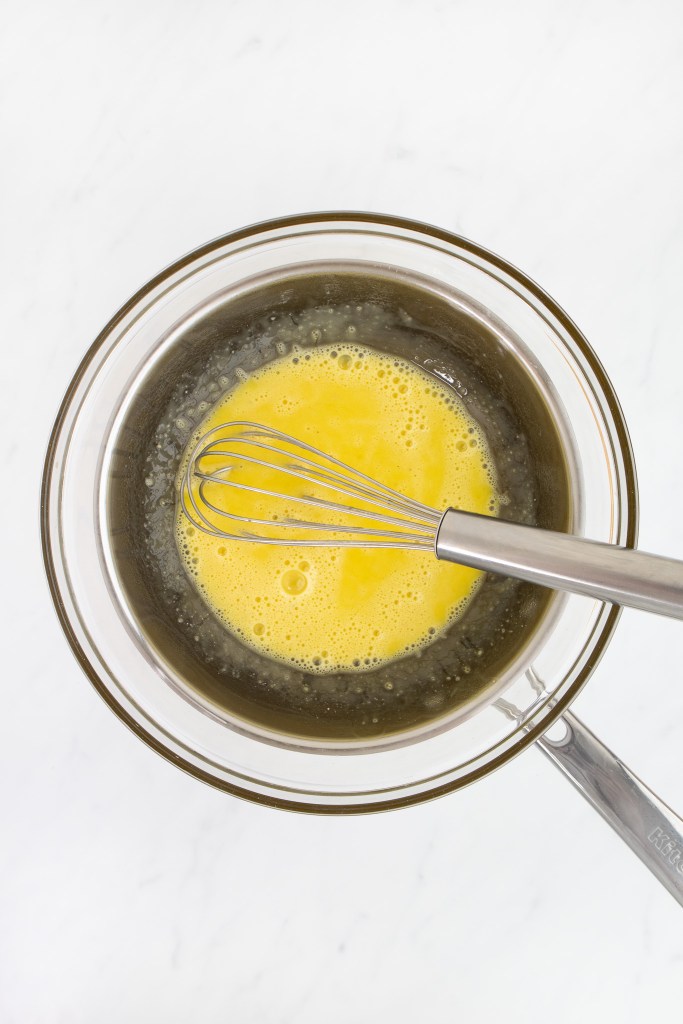
In a medium-sized bowl, add in the egg yolks and whisk for 1 to 2 minutes, until smooth and pale yellow. Next, add in the lemon juice, water, salt, and pepper, and whisk until combined.

Add in 1 Tbsp of your melted (and slightly cooled) butter to the egg mixture. This will help prevent scrambling!
Place the bowl containing the egg mixture over the top of the saucepan. Heat the egg mixture, while whisking constantly. Be very careful not to overheat! Continue whisking until the mixture is the consistency of mayonnaise.
Pro tip: The time it takes to whisk depends on your heat. The egg mixture will first foam before thickening. Be careful: once it begins to thicken it can overcook very quickly. Have an oven mitt or kitchen towel nearby to remove the hot bowl from the double boiler if you feel the mixture is getting too hot.
Immediately remove the bowl from the double boiler. Continue whisking and drizzle in the melted butter (just a few dribbles at a time), until all of the butter has been incorporated. Note: Pouring the butter in too quickly can cause your sauce to be too thin.

Taste your sauce and add a pinch of additional salt or pepper, as needed. Serve immediately.
To keep your sauce warm, turn your saucepan off (or set over very low heat) and place the bowl back over the top. Keep an eye on it… and be careful not to overheat!
Classic Hollandaise Sauce
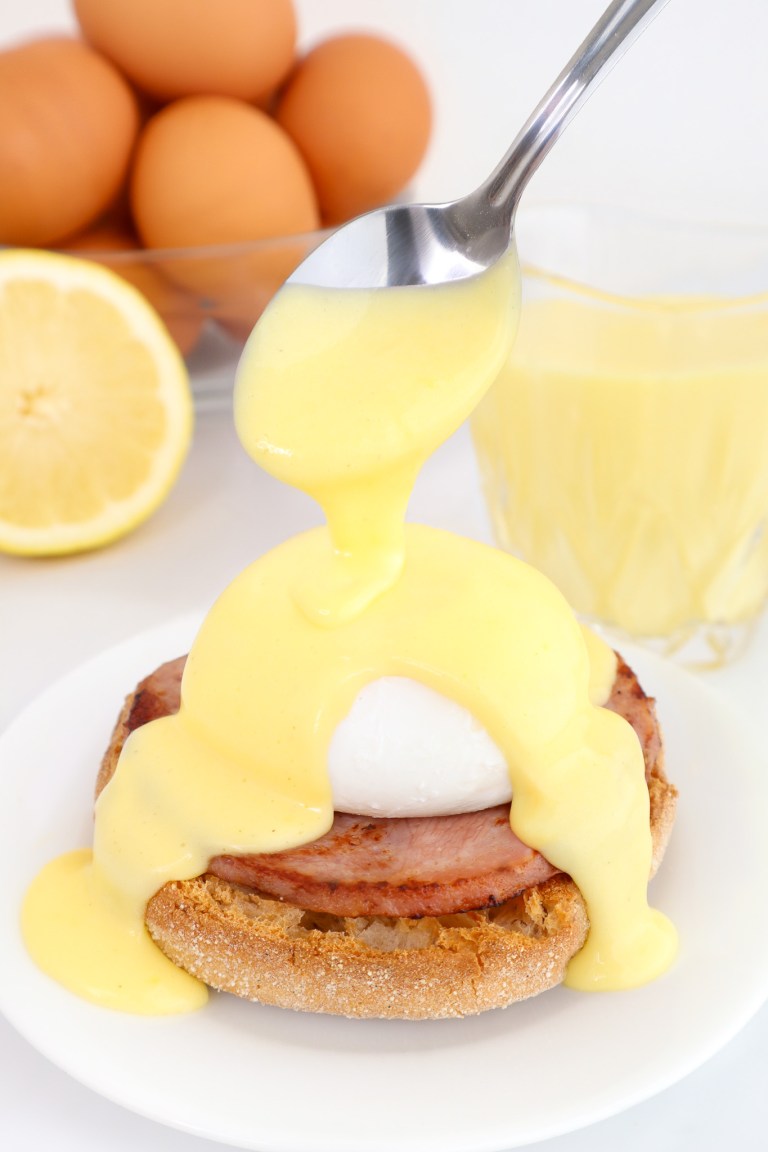
Ingredients
- 3 large egg yolks
- 1 Tbsp freshly squeezed lemon juice
- 1 Tbsp water
- ¼ tsp kosher salt (I use Diamond Crystal)
- 1/16 tsp finely ground white pepper or black pepper
- ½ cup (1 stick) unsalted butter, melted and cooled slightly
Instructions
- Melt the butter and set it aside.
- Place a medium saucepan filled with 1 to 2 inches of water over low heat.
- In a medium bowl, add in the egg yolks and whisk until smooth and pale yellow (about 1 to 2 minutes). Add in the lemon juice, water, salt, and pepper, and whisk until combined.
- Add in 1 Tablespoon of the melted (slightly cooled) butter to the egg mixture. (This helps prevent scrambling.)
- Place the bowl containing the egg mixture over the saucepan. Heat the mixture, whisking constantly. (Note: Be very careful not to overheat.) Continue whisking until the mixture reaches the consistency of mayonnaise.Pro tip: The time it takes to whisk will vary depending on your heat. The mixture will first foam before thickening. Be careful: once it begins to thicken, it can overcook very quickly. Keep an oven mitt or kitchen towel nearby to remove the hot bowl from the double boiler if you feel the mixture is getting too hot.
- Immediately remove the bowl from the double boiler. Continue whisking and drizzle in the melted butter, just a few dribbles at a time, until all the butter is incorporated. (Note: Pouring the butter in too quickly can result in a sauce that's too thin.)
- Taste the sauce and add a pinch of additional salt or pepper, as needed. Serve immediately.
- To keep the sauce warm, turn the saucepan off (or set to very low heat) and place the bowl back on top. Keep an eye on it, and be careful not to overheat!